
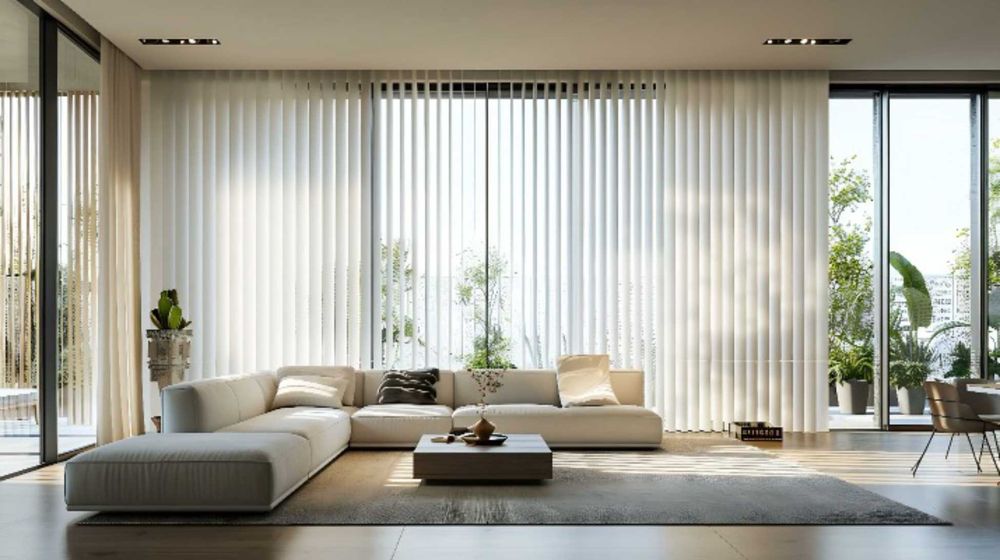
Office Vertical Blinds: The Classic Sun Control Solution for Modern Spaces
In a modern office, natural light brings openness but can also cause glare and heat that hurt productivity if it is not properly controlled. Office vertical blinds are one of the classic answers, with an elegant design, flexible light control and a good fit for windows and large glazed walls.
In modern office design, natural light plays an important role in creating a workspace that feels airy, comfortable and professional. However, too much direct sunlight through glazed windows can cause glare, affect computer screens and make the space feel hot. This is why office vertical blinds still hold an important place in many projects today.
Built from vertical louvres that can rotate and be drawn to either side, vertical blinds let users actively control how much light enters the room. At the same time, the blind's vertical lines create the impression of a taller, more elegant window, suited to offices, meeting rooms, showrooms and many other modern spaces.
Rather than chasing an elaborate design, office vertical blinds focus on simplicity, effectiveness and practicality. This is exactly why the product is still chosen by many businesses, households and property developers.
1. What Are Office Vertical Blinds?
Office vertical blinds, also called vertical louvre blinds, are a type of window covering made from several vertical louvres connected to a track system at the top.
The louvres can rotate through various angles to change the direction and amount of light entering the space.
Depending on the design, the blind can be:
- Rotated to adjust light.
- Drawn fully to one side.
- Drawn open from the middle to both sides.
- Closed fully for more privacy.
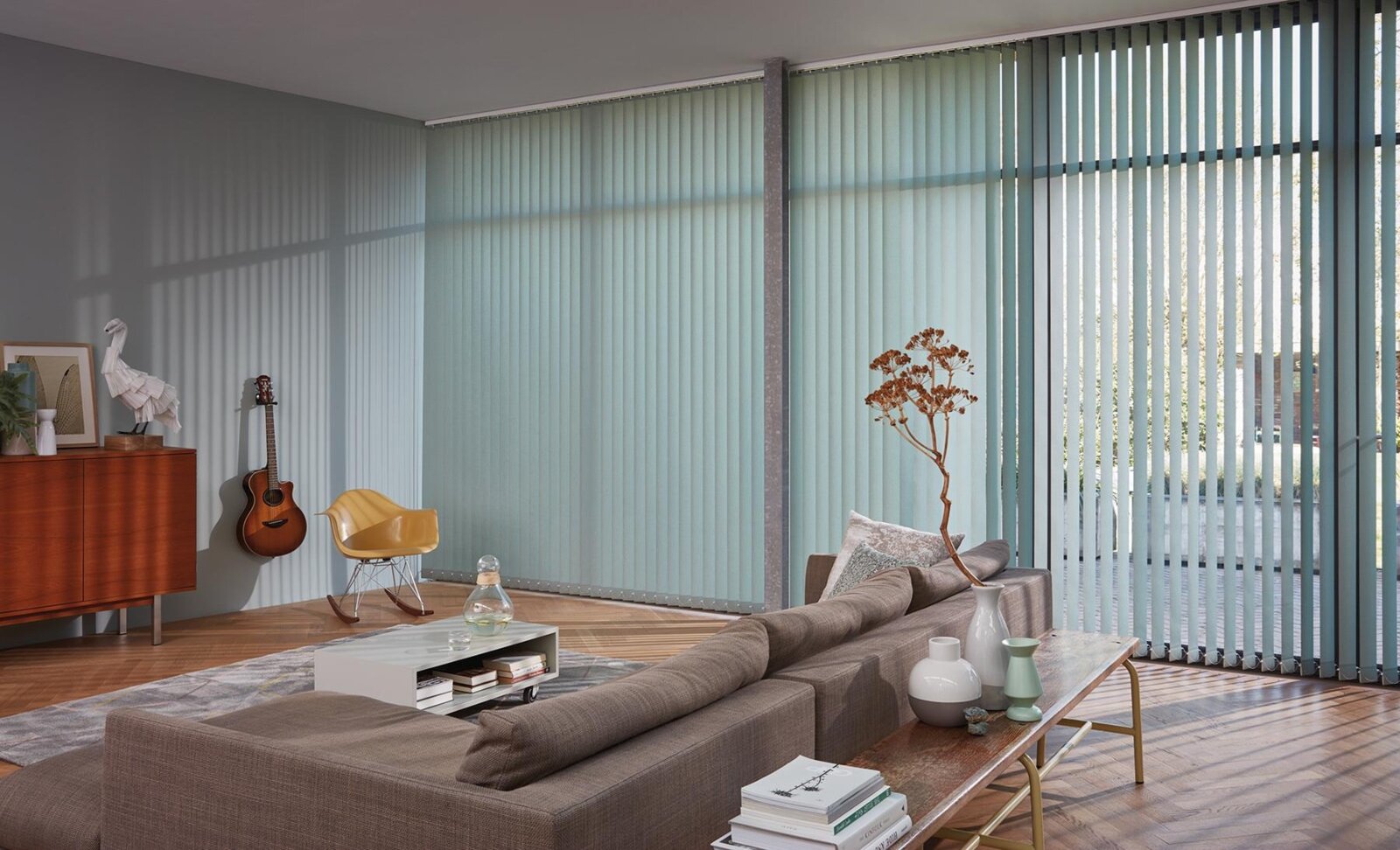
Thanks to this build, vertical blinds both block sun and help adjust light while creating a highlight for the window area.
Compared with traditional fabric curtains, vertical blinds have a neater profile and are especially well suited to large windows, glazed walls or office spaces.
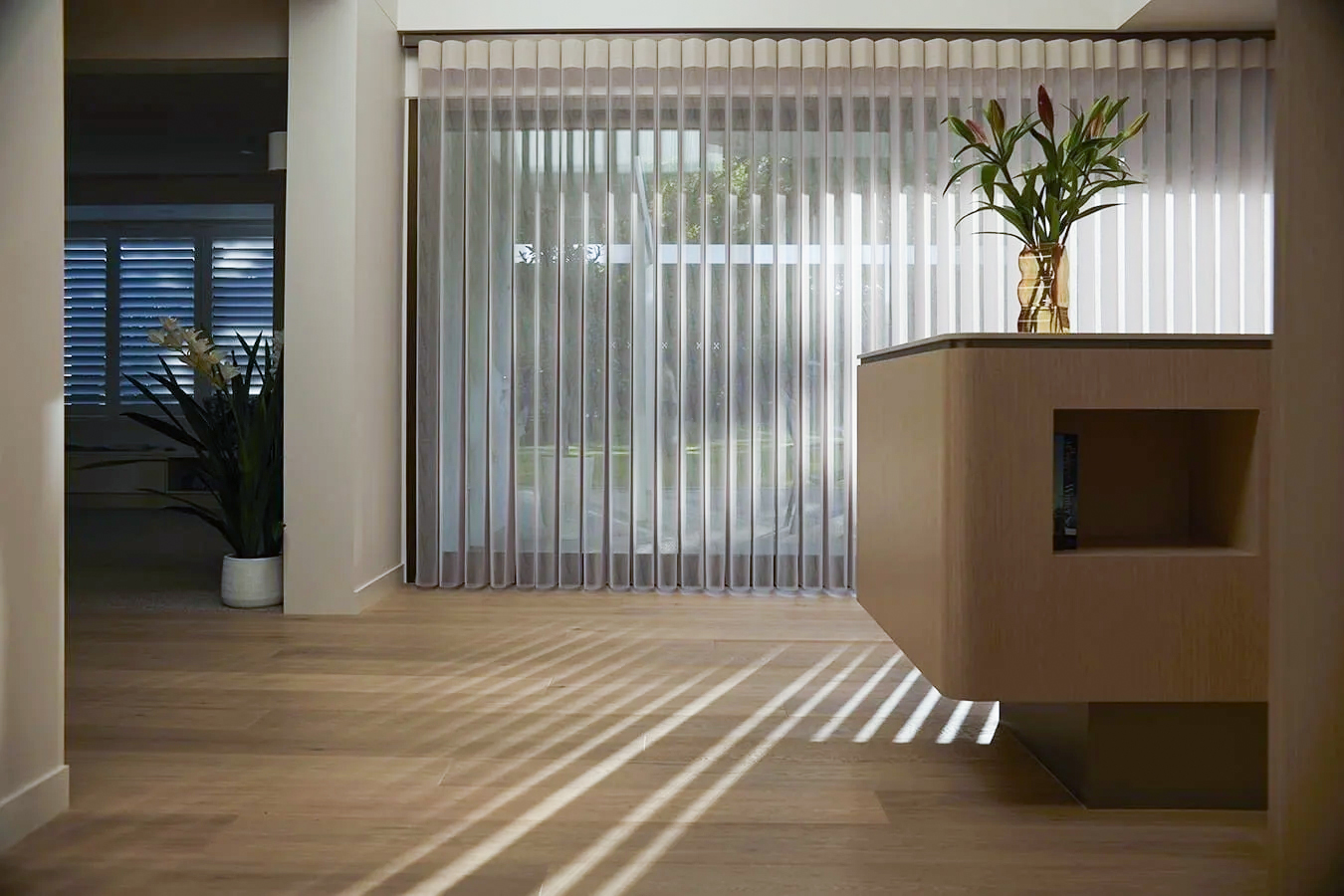
2. Why Are Vertical Blinds Still Popular in Modern Offices?
Although the market today offers many types of blinds, such as roller blinds, zebra blinds, aluminium venetian blinds or fabric curtains, office vertical blinds still have their own advantages.
A design suited to large glazed windows
Modern offices often use a lot of glazing to make the most of natural light.
However, large glazed windows also mean sunlight can shine directly onto desks.
Vertical blinds are a good solution for these areas thanks to their vertical louvre design, which can cover the full height of the window.
Flexible light adjustment
This is one of the most notable advantages.
Instead of only fully open or fully closed, users can rotate the louvres to control how much light enters.
When you need more natural light, you can rotate the louvres open.
When sunlight shines directly onto a computer screen, you can rotate the louvres to cut the glare.
When privacy is needed, you can close the louvres.
Creates a sense of a taller space
The blind's vertical lines create a visual effect that stretches upward.
For an office with a low ceiling or a tall window, this design can make the space feel more open.
Suits many styles
Vertical blinds have a fairly simple design, so they are easy to pair with many kinds of offices:
- Modern offices.
- Minimalist offices.
- Traditional offices.
- Meeting rooms.
- The director's office.
- Showrooms.
- Service centres.
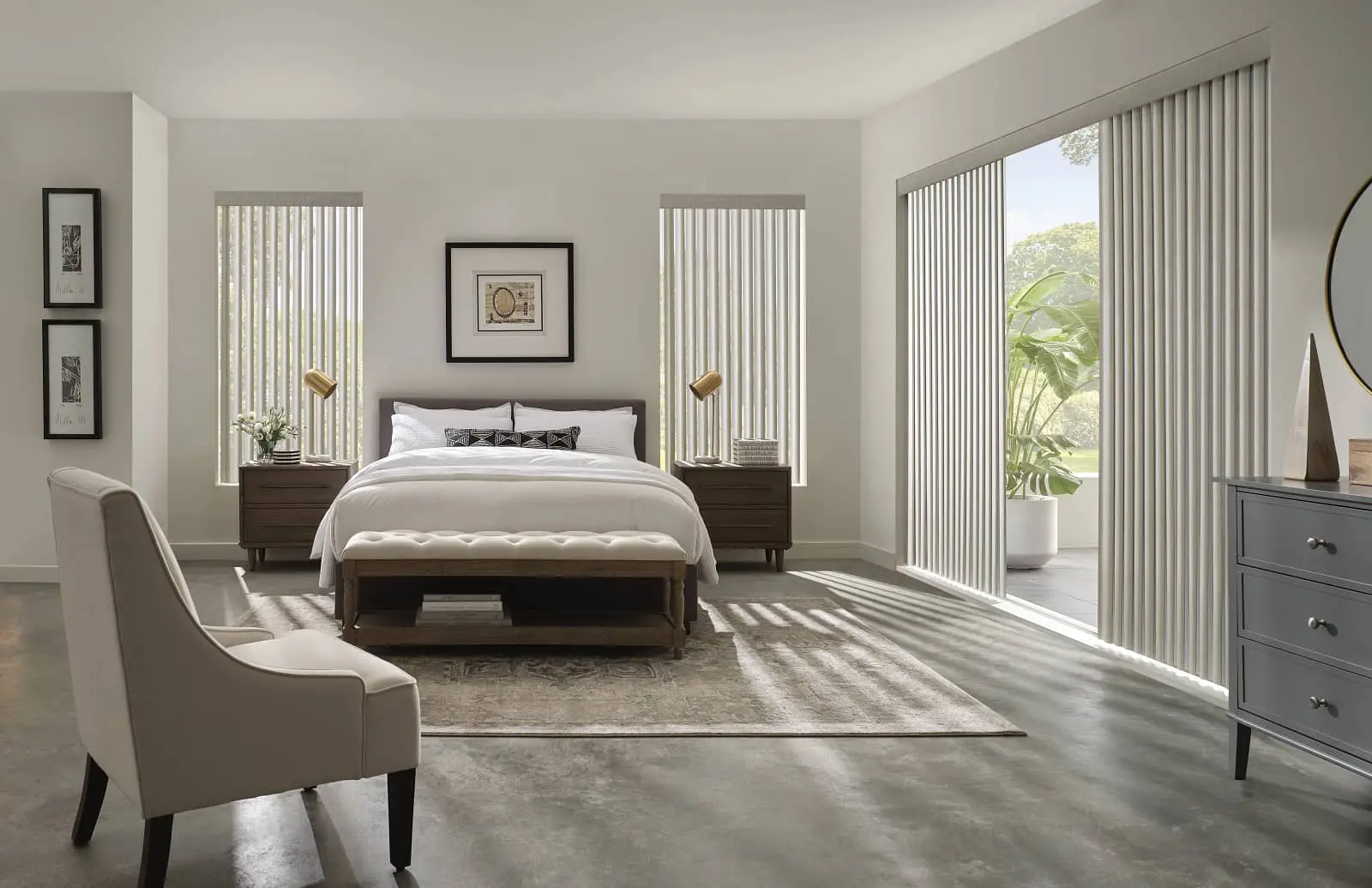
3. Standout Advantages of Office Vertical Blinds
3.1. Blocking sun and reducing direct light
The most important purpose of vertical blinds is light control.
Especially in offices with a lot of glazing, the blind can help reduce the amount of direct light hitting the work area.
This is particularly useful for areas that use:
- Computers.
- Presentation screens.
- TVs.
- Office equipment.
- Meeting rooms.
When light is too strong, a screen can suffer glare and become hard to read.
Vertical blinds help create more comfortable lighting conditions while still allowing natural light in.
3.2. Directing light
Unlike many blinds that only have an open or closed state, vertical blinds can rotate the louvres through various angles.
This lets users adjust light at different times of day.
For example:
Morning:
The blind can be partly opened to make the most of natural light.
Midday:
The louvres can be rotated to limit direct sunlight.
Afternoon:
Especially for west-facing windows, the blind can be closed more fully to reduce strong light.
End of day:
The blind can be drawn to one side to make the most of the remaining light.
4. What Spaces Suit Office Vertical Blinds?
One advantage of vertical blinds is how widely they can be applied.
Workspaces
This is the most common application.
Vertical blinds create a professional, neat feel and suit large windows.
White, cream, taupe or grey are commonly chosen for modern offices.
Meeting rooms
Meeting rooms usually need good light control.
When using a screen or projector, the blind can be closed to reduce light.
When the meeting ends, the blind can be opened to bring in natural light.
The director's office
For the director's office, you can choose vertical blinds in a more elegant colour such as dark grey, grey, brown or beige.
Paired with timber furnishings, neutral-coloured blinds create a professional, warm feel.
Showrooms
A showroom needs to make the most of light while still controlling sun.
Vertical blinds can be adjusted depending on the time of day.
Home living rooms
Not just for offices, vertical blinds also suit homes with large glazed windows.
Especially townhouses, villas or apartments with a wide balcony door.
5. Are Vertical Louvre Blinds and Office Vertical Blinds the Same?
In practice, vertical louvre blinds, vertical blinds and office vertical blinds are usually used to refer to the same product group.
The name can differ depending on the supplier or how the customer refers to it.
The key identifying feature is that the product uses louvres arranged vertically.
These louvres are connected to a track at the top and have a rotating mechanism to adjust light.
So when searching for the product online, customers may use several search terms:
- Office vertical blinds.
- Vertical louvre blinds.
- Vertical louvre curtains.
- Office vertical curtains.
- Office window blinds.
- Vertical sun-blocking blinds.
Using these keywords also helps customers find a wider range of product designs.
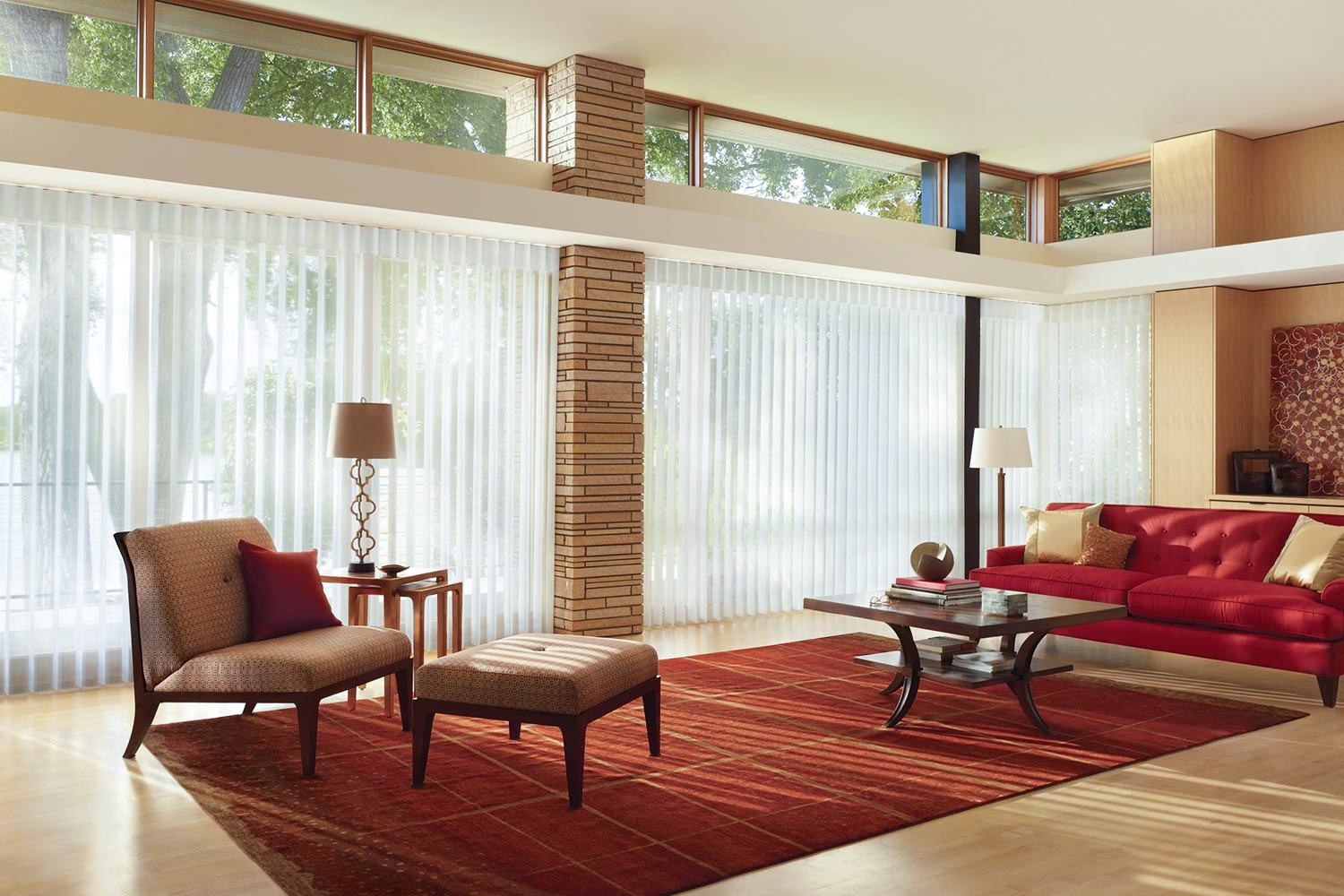
6. How to Choose a Vertical Blind Colour That Suits Your Office
Colour has a direct effect on how a workspace feels.
Do not choose a blind based on personal preference alone; also consider your wall colour, flooring, furniture and brand identity.
White blinds
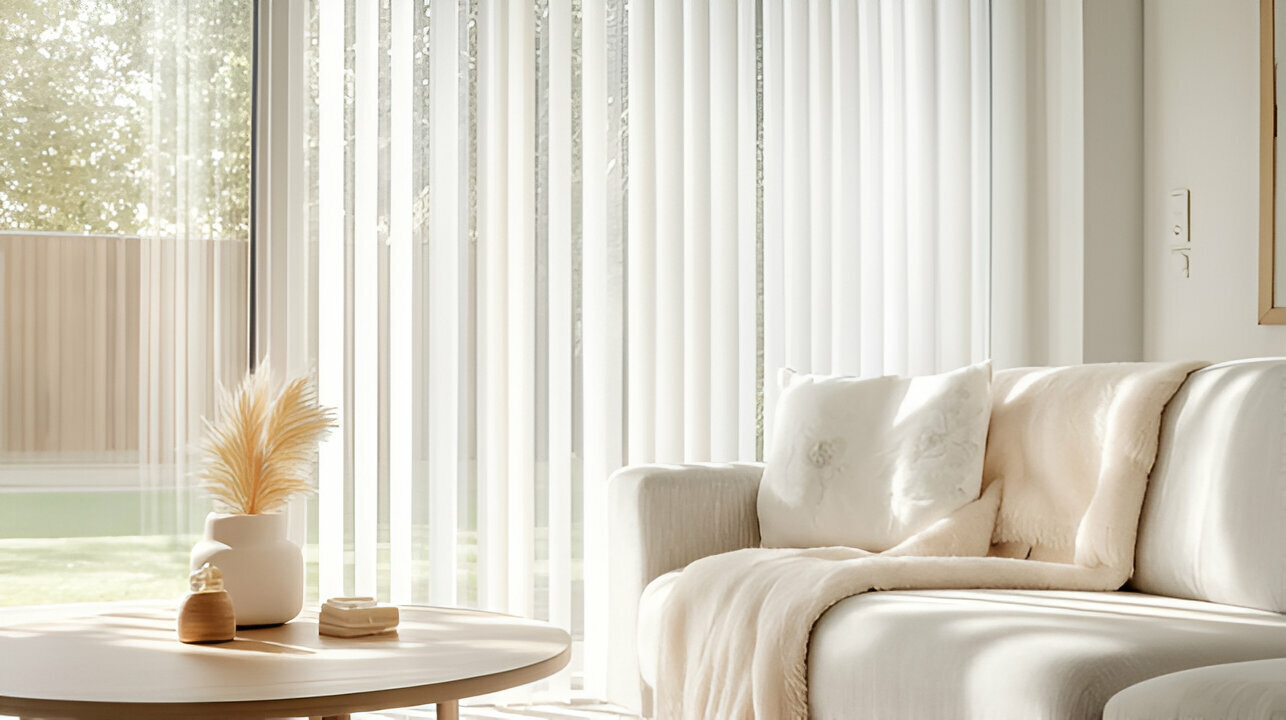
Create a clean, bright, spacious feel.
Suited to a minimalist-style office.
Cream blinds
Bring a gentler, warmer feel than white.
Can be paired with timber furnishings or beige tones.
Taupe blinds
This is a popular choice for a modern office.
Taupe pairs easily with black, white or timber furniture.
Dark grey blinds
Suited to a meeting room or a management office.
Creates a solid, professional feel.
Blinds in your brand colours
Some businesses may choose a blind colour close to their brand identity.
However, avoid using a very bold colour across a large area if you want to keep a professional, comfortable feel.
7. Choosing Vertical Blinds Based on Window Direction
Window direction is a very important factor that is often overlooked.
East-facing windows
Usually get direct sun in the morning.
The blind needs good light control to avoid glare early in the day.
West-facing windows
This direction usually needs particular attention.
Afternoon sun is intense and can heat up the area near the glazing.
Favour a blind material and colour suited to sun-blocking needs.
South-facing windows
Depending on the architecture and the project's location, light can be quite strong at several points during the day.
Conduct an on-site survey before choosing.
Windows with little light
If the office already lacks light, avoid a blind that is too dark or too thick.
Light colours and materials that diffuse light may be more suitable.
8. What Draw Styles Are Available for Office Vertical Blinds?
Depending on the window design and furniture layout, vertical blinds can be designed with different draw styles.
Drawn to one side
Suited to windows with open space on one side.
Drawn open from the middle to both sides
Suited to large windows or wide glazed walls.
This style creates a balanced look when the blind is open.
Drawn to the centre
May suit certain unusual window designs.
The draw direction should be decided during the initial survey to avoid clashing with a desk, cabinet or walkway.
9. Do Vertical Blinds Suit a Modern-Style Office?
Yes.
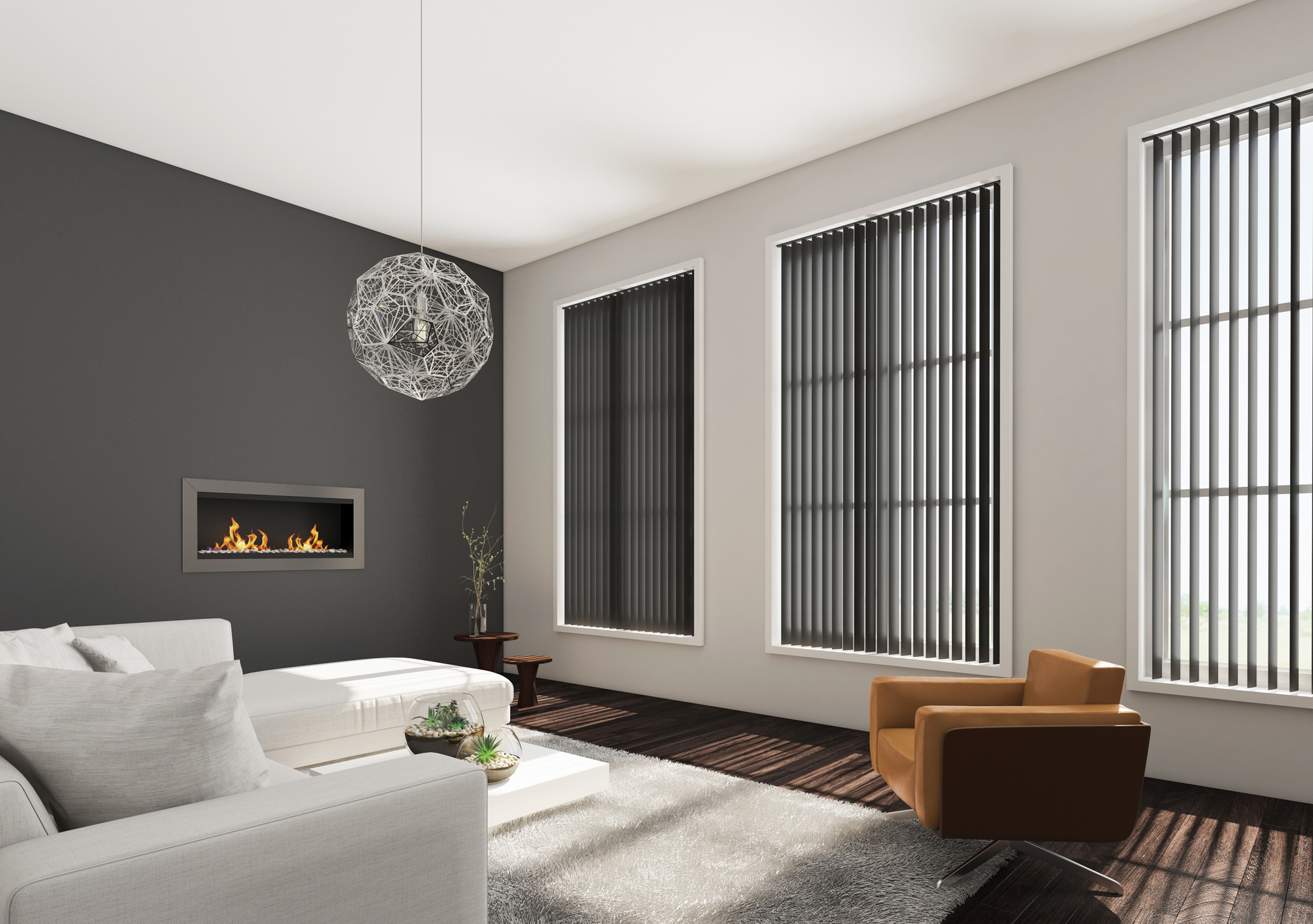
In practice, vertical blinds are one of the blind types whose design suits a modern style very well.
The vertical lines of the louvres create a neat look, while the track system at the top has a simple design.
Paired with:
- A desk with metal legs.
- Modern office chairs.
- Glass.
- Metal.
- White furnishings.
- Timber furnishings.
vertical blinds can become a natural part of the overall architecture.
10. Vertical Blinds or Roller Blinds: Which Should You Choose?
These are two product lines commonly used in offices.
Vertical blinds
Advantages:
- Suited to tall windows.
- Suited to large glazed walls.
- Flexible light direction.
- Create a height effect.
- A design well suited to offices.
Roller blinds
Advantages:
- Compact.
- Minimalist.
- Suited to small and medium windows.
- Easy to combine with many spaces.
If the window is tall and wide, vertical blinds are usually worth considering.
If the window is small, roller blinds may feel neater.
11. Do Vertical Blinds Help Reduce Heat?
Vertical blinds can help reduce the amount of light and direct solar radiation entering a room, but the actual heat-reduction effect depends on many factors.
These include:
- The blind material.
- The colour.
- The thickness.
- The window's direction.
- The type of glass.
- The area of glazing.
- The gap between the blind and the window.
Not every type of vertical blind has the same insulating ability.
If an office has a west-facing window and regularly gets hot, choose a solution based on actual conditions rather than the product name alone.
12. Common Mistakes When Choosing Office Vertical Blinds
Choosing a colour that is too dark
Dark-coloured blinds can create an elegant look, but used in a small, dimly lit office, they can make the space feel heavy.
Choosing the wrong size
A blind that is too short or does not fully cover the window will reduce sun-blocking effectiveness and look worse.
Not accounting for the draw direction
If the draw direction is not planned from the start, opening the blind can clash with a desk or cabinet.
Focusing on price alone
A good set of blinds needs to be assessed on:
- Material.
- The track.
- Accessories.
- The operating mechanism.
- Size.
- Finish quality.
Not surveying actual light conditions
Two offices of the same size but facing different directions may need completely different blinds.
13. How to Choose Attractive, Suitable Office Vertical Blinds
You can follow 6 simple steps:
Step 1: Measure the window
Determine the width, height and area to be covered.
Step 2: Determine sun direction
Pay particular attention to east- and west-facing windows.
Step 3: Determine your needs
Do you need to block sun, reduce glare or add privacy?
Step 4: Choose the colour
Favour a colour that harmonises with the walls, flooring and furnishings.
Step 5: Choose the draw direction
Account for the position of the desk, cabinet and walkway.
Step 6: Check a physical sample
View a material sample before ordering a large quantity for the whole office.
14. Office Vertical Blinds - An Optimal Solution for a Professional Space
A great-looking office does not depend on furniture or lighting alone.
Windows and glazed walls, which take up a large area, also have a significant effect on the overall feel.
A properly chosen set of office vertical blinds can help:
- Control light.
- Reduce glare.
- Add privacy.
- Complete the look.
- Create a sense of a taller space.
- Support a professional image.
Especially for offices with a lot of glazing, vertical blinds can become an important part of the interior design.
15. ZENDECOR - Advice on Vertical Blinds for Every Project
Every office has a different size, sun direction and interior style. So choosing office vertical blinds should also be based on actual conditions.
ZENDECOR offers blind advisory solutions tailored to each space, from small offices to meeting rooms, showrooms, townhouses and villas.
When choosing vertical blinds, ZENDECOR can advise based on:
- Window size.
- Sun direction.
- Interior colour scheme.
- Sun-blocking needs.
- Privacy level.
- Draw direction.
- Architectural style.
For customers looking for office vertical blinds in Hai Phong, an on-site survey before installation is an important step for choosing the right size, colour and installation method.
Office vertical blinds are a classically designed sun-blocking solution that still suits modern spaces well. The simplicity of the vertical louvres, their ability to rotate for light control, and a design well suited to large glazed windows all help the product meet both function and looks.
If you are designing a new office, renovating a workspace or looking for a sun-blocking solution for a glazed wall, vertical blinds are well worth considering. In particular, base your choice on sun direction, window size, interior colour, light needs and the operating method, rather than on style alone.
ZENDECOR focuses on blind and curtain solutions that are both attractive and practical, helping every workspace become more professional, comfortable and convenient.
>>Read more: Office Vertical Blinds: A Classic Sun-Blocking Solution for Modern Spaces
Related articles
View all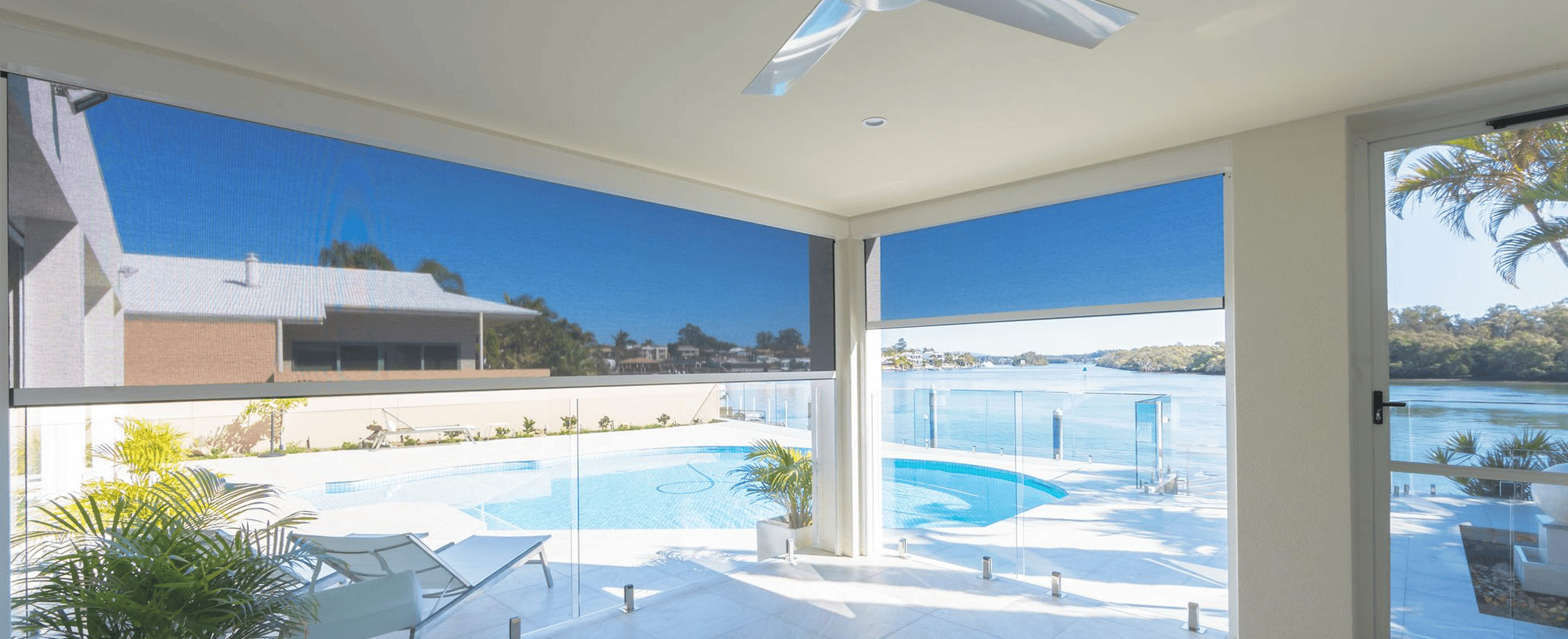
ZENDECOR Smart Zipscreen Blinds – A Premium Sun-Shading Trend for Modern Townhouses and Villas
In modern architecture, open spaces such as balconies, patios, large glass windows, and outdoor relaxation areas are becoming increasingly important. However, intense sunlight, high temperatures, wind, dust, and privacy concerns can affect a family's comfort and daily living experience. Choosing the right sun-shading solution not only enhances comfort but also contributes to the overall aesthetics and architectural appeal of the property.
Office Aluminum Blinds – The Perfect Choice for Modern Workspaces
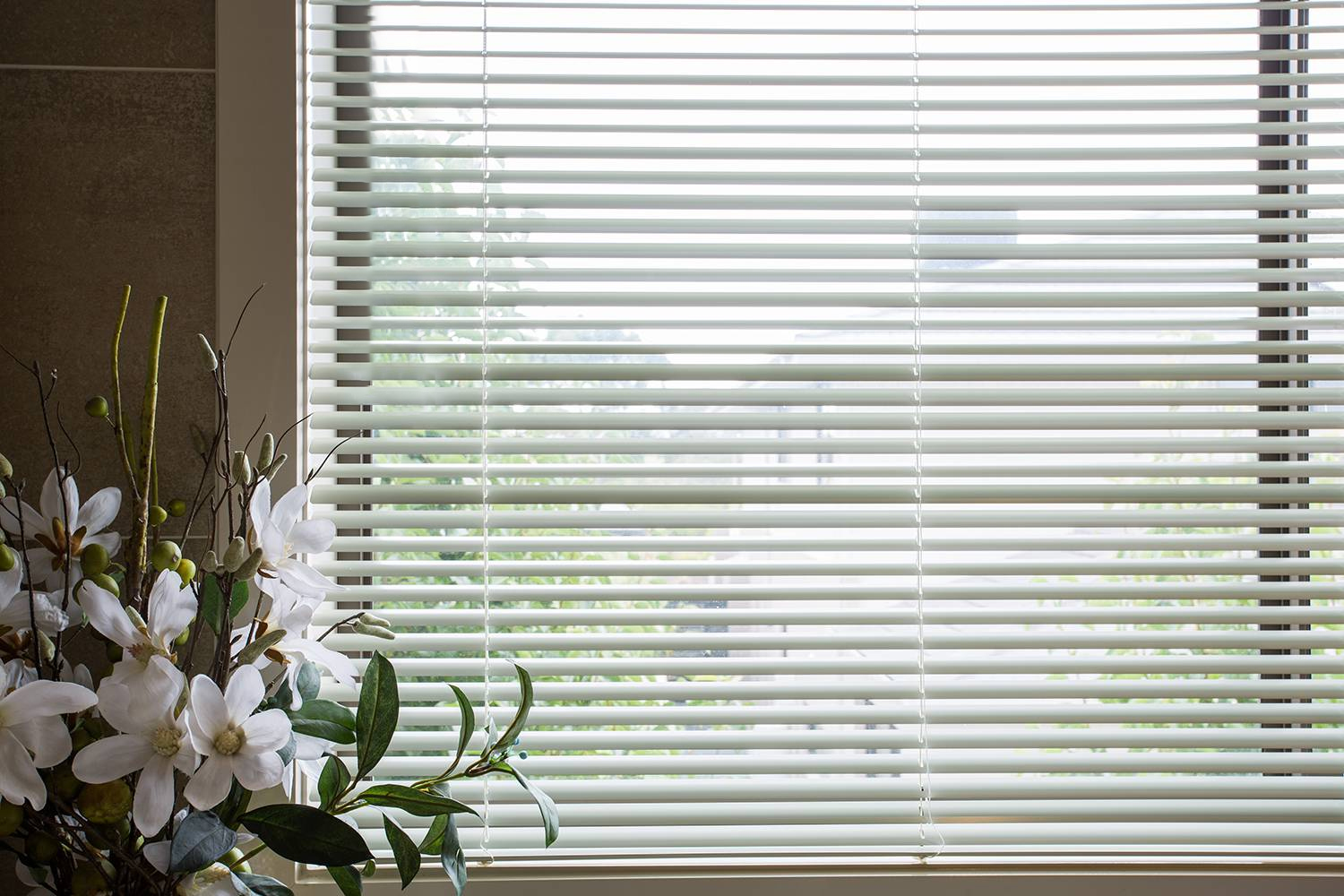
ZENDECOR office aluminum blinds offer a modern sun-shading solution, allowing flexible light control, reducing glare, and creating a professional working environment. With a sleek design, easy maintenance, and cost-effective performance, aluminum blinds are ideal for corporate offices, meeting rooms, and workspaces with glass windows. ZENDECOR provides expert advice to help customers choose the most suitable blinds for their space and specific needs.
Beautiful Zebra Blinds – A Modern Window Décor Solution | ZENDECOR
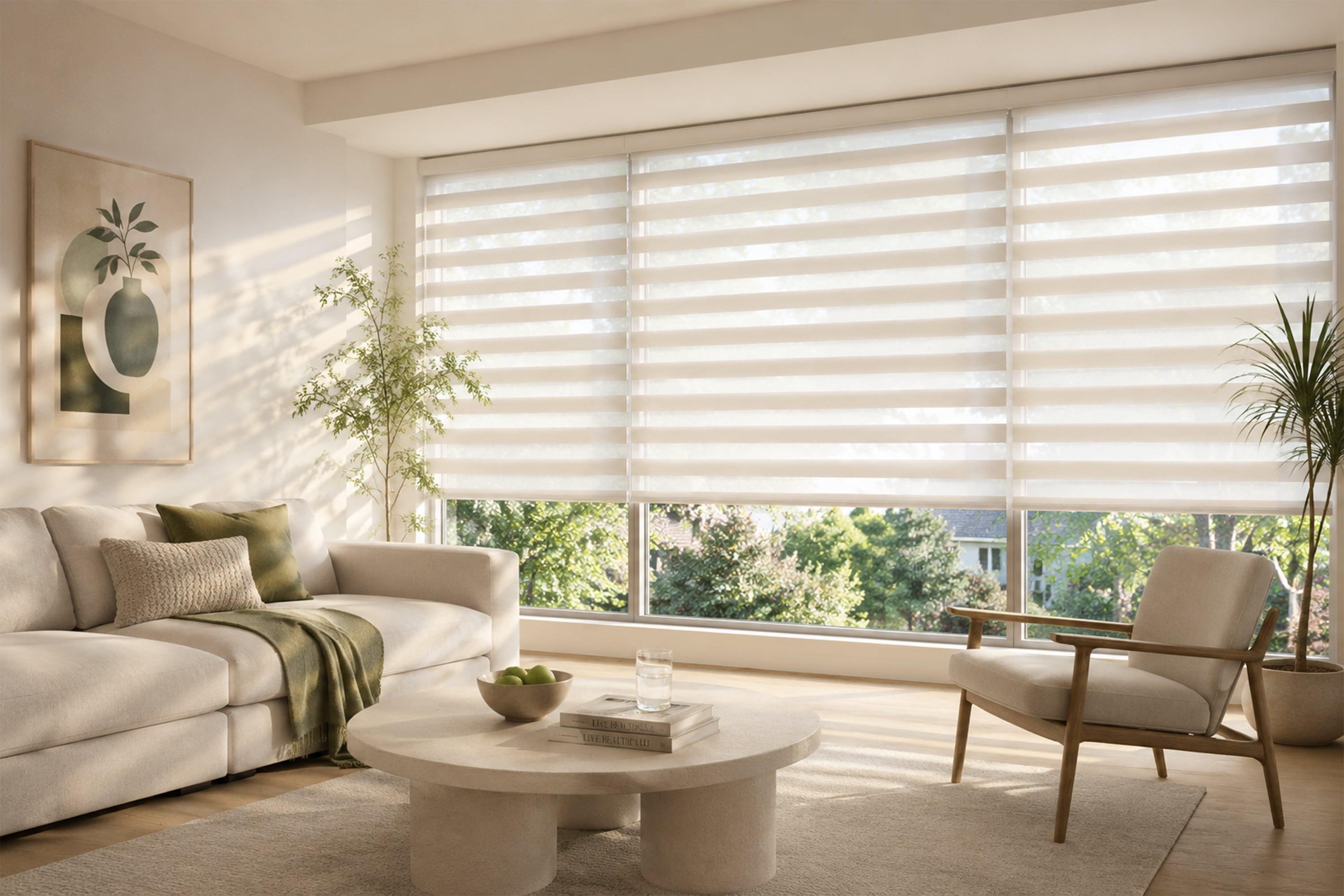
The harmonious combination of sheer and light-filtering fabric bands creates a unique design that allows flexible light control while enhancing privacy and maintaining an airy, open atmosphere. From elegant living rooms and cozy bedrooms to modern offices, zebra blinds are more than just a practical window-covering solution — they are a sophisticated decorative accent that elevates the beauty of any interior.
ZENDECOR – Beautiful Curtains for Luxury Resorts, Elevating Every Space
A luxurious resort experience is defined not only by sophisticated architecture but also by the harmony of every interior detail. With their soft elegance, refined appearance, and ability to control natural light while ensuring privacy, ZENDECOR curtains help create the perfect relaxing atmosphere for resorts, hotels, villas, and luxury holiday homes.
From timeless neutral tones to premium fabrics, every choice brings a touch of sophistication, connects people with nature, and elevates the overall resort experience.