

How to Choose Fire-Resistant Curtains: Practical Tips for Homes and Commercial Projects | ZenDecor
Fire-resistant curtains are an increasingly popular window treatment solution for modern buildings, offering materials designed to limit flammability and meet relevant safety requirements. From homes and hotels to offices and commercial projects, choosing the right fire-resistant curtains requires careful consideration of fabric quality, test certificates, aesthetics, and installation methods. Explore ZenDecor’s practical guide to selecting suitable fire-resistant curtains for a more comfortable, functional, and safety-conscious environment.
In modern interior design, curtains do more than enhance aesthetics, control light, and provide privacy; they must also meet certain safety requirements. This is particularly important in hotels, offices, restaurants, schools, hospitals, and commercial buildings, where choosing suitable fire-resistant curtains is becoming an increasingly important consideration.
What are fire-resistant curtains? How can you distinguish high-quality fire-resistant curtains from conventional window treatments? What factors should you consider when choosing curtains for residential or commercial projects to achieve both aesthetic appeal and appropriate safety performance?
In this article, ZenDecor shares essential tips to help you select the right fire-resistant curtains based on your intended use, the characteristics of your space, and the technical requirements of your project.
1. What Are Fire-Resistant Curtains?
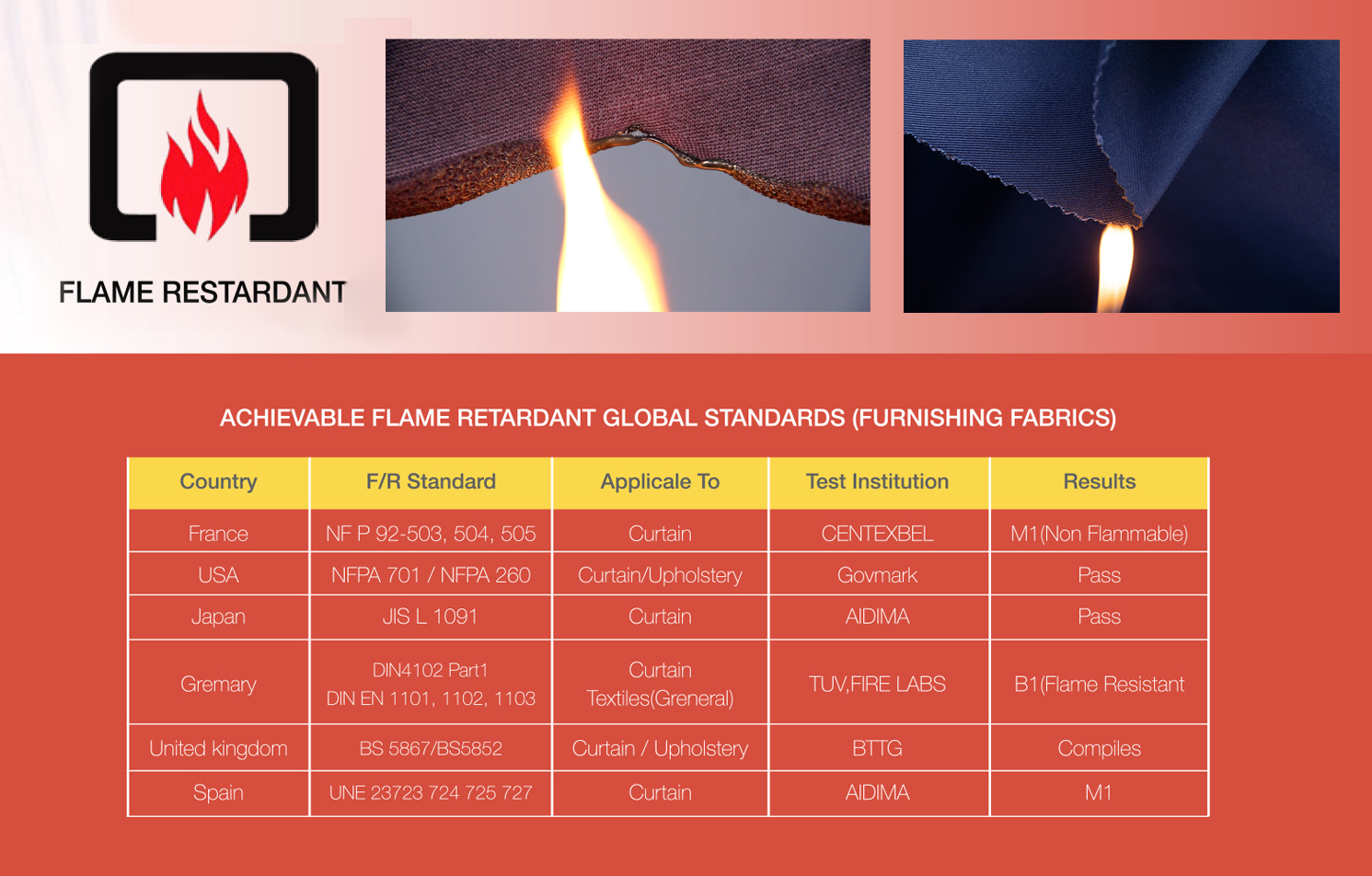
Fire-resistant curtains are a general term for window treatments made from materials with flame-retardant properties or treated with specialized fire-retardant technologies to reduce their tendency to ignite and limit flame spread under specific test conditions.
Depending on their construction and manufacturing technology, these curtains may be made from inherently flame-resistant fibers or fabrics treated with specialized chemicals. Certain technical curtain systems are designed to meet specific reaction-to-fire requirements under applicable testing standards.
Unlike conventional decorative curtains, fire-resistant curtains should be selected based on their technical specifications, material properties, and relevant test documentation to ensure they are suitable for their intended application.
It is important to understand that fire-resistant curtains are not necessarily fireproof and do not provide absolute protection against fire. Their fire-resistant performance depends on the material, construction, treatment method, testing conditions, and actual use.
Therefore, before purchasing, customers should determine whether their project requires flame-retardant fabric for decorative purposes or a specialized fire-resistant curtain system designed to meet specific technical requirements.
2. Why Should You Choose Fire-Resistant Curtains?
2.1. Enhancing Safety in Indoor Spaces
Curtains are common interior furnishings that often cover relatively large areas around windows, glass doors, and space-dividing sections. When made from easily combustible materials, they may contribute to the spread of fire if an incident occurs.
Choosing suitable fire-resistant curtains can help reduce certain risks associated with material ignition under specified testing conditions.
This is an important consideration in spaces used by large numbers of people, including hotels, restaurants, offices, shopping centers, and accommodation facilities.
However, fire-resistant curtains are only one component of an overall fire safety strategy. They do not replace fire detection and suppression systems, emergency exits, or other fire prevention and protection measures required for a building.
2.2. Meeting the Technical Requirements of Certain Projects
Some construction and interior design projects specify particular fire performance requirements for materials used inside buildings.
In these cases, curtain selection should be based on the project specifications, the owner's requirements, and the applicable standards or technical regulations.
Property developers and project owners should consult design professionals, fire safety consultants, or technical specialists to determine the appropriate materials for their projects.
Do not rely solely on marketing descriptions such as “premium fire-resistant fabric” without reviewing documentation that verifies the product's technical performance.
2.3. Combining Safety with Aesthetic Appeal
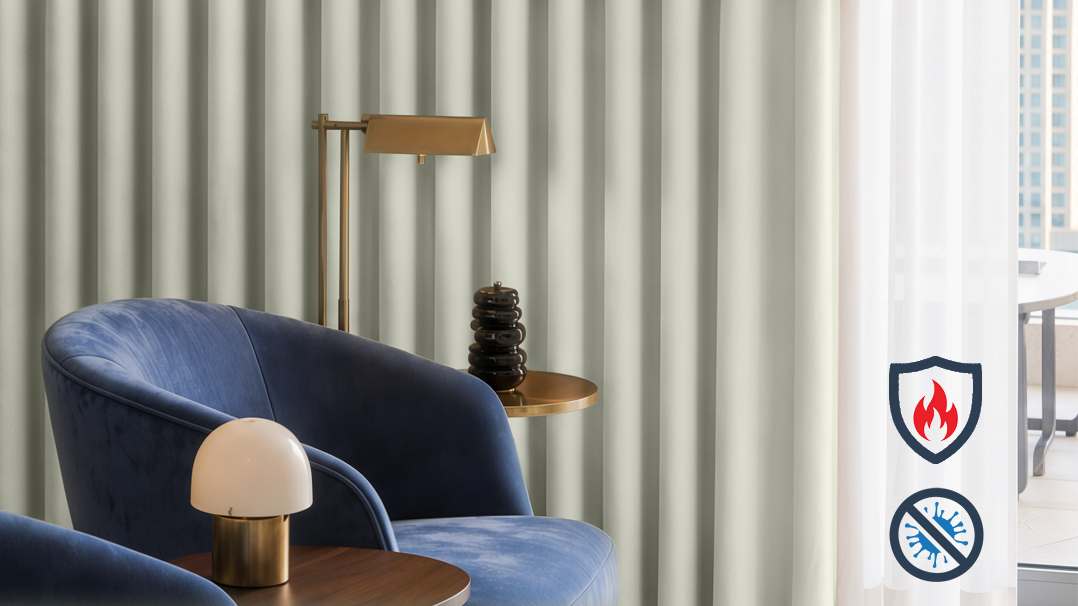
Many people assume that fire-resistant curtains are suitable only for industrial facilities or spaces where technical performance takes priority. In reality, depending on the manufacturer, fire-resistant fabrics are available in a variety of colors, weaves, textures, and design styles.
From minimalist offices and luxurious hotels to contemporary apartments, these curtains can complement different interior styles when the right materials and colors are selected.
This allows project owners to balance technical requirements, practical functionality, and the overall aesthetic value of their spaces.
3. Common Types of Fire-Resistant Curtains
Fire-resistant curtains on the market can be classified according to their materials, treatment technologies, and intended applications. When choosing a product, customers should understand the differences between these categories.
3.1. Curtains Made from Specially Treated Fire-Resistant Fabrics
This category includes curtains made from fabrics treated with specialized technologies or flame-retardant chemicals to improve their reaction to fire.
One advantage of these products is their versatility in interior design. Depending on the collection, they may be available in different colors, fabric weights, and surface textures.
Treated fire-resistant curtains are worth considering for hotels, conference rooms, restaurants, offices, and other spaces that require decorative window treatments with specific fire performance characteristics.
When selecting these fabrics, it is important to determine whether their fire-resistant properties can be maintained after cleaning or laundering. Not all treated fabrics retain the same performance after washing, so the manufacturer's care instructions should be followed carefully.
3.2. Curtains Made from Inherently Flame-Resistant Fibers
Some fabrics are manufactured using fibers with inherent flame-resistant properties rather than relying solely on a surface treatment.
Depending on the fiber composition and weaving technology, these materials may meet specific reaction-to-fire testing requirements.
This type of curtain may be considered for projects requiring long-term use or more stringent control over the fire performance of interior materials.
However, not all products made from specialized fibers provide the same level of performance. Customers should verify the product code, fiber composition, and corresponding test results before making a decision.
3.3. Fire-Resistant Roller Blinds
Roller blinds feature a streamlined design and operate by rolling the fabric up or down, making them suitable for many contemporary spaces.
For offices, meeting rooms, commercial facilities, and buildings with extensive glazing, roller blinds made from materials that meet relevant fire performance requirements can be a practical option.
When selecting these products, customers should evaluate not only the fabric but also the roller mechanism, hardware, and installation requirements. A fabric's fire-resistant properties do not automatically mean that the complete blind system provides fire compartmentation or fire separation.
3.4. Specialized Fire Curtains for Building Projects
Certain technical curtain systems are specifically designed for fire control or compartmentation in accordance with specialized project requirements. These systems differ from conventional decorative curtains that simply feature reduced flammability.
They may require specific construction methods, operating mechanisms, control components, and inspection procedures.
If a project requires a curtain system capable of resisting fire for a specified period or meeting particular fire compartmentation requirements, the selected system must be appropriately designed and tested for that purpose. Conventional decorative fire-resistant curtains should not be used as a substitute.
4. How to Choose Fire-Resistant Curtains for Homes and Commercial Projects
To select the right fire-resistant curtains, customers should consider their intended use, safety requirements, material quality, and overall budget.
4.1. Identify the Intended Application
Identifying the intended application is the first and most important step when choosing fire-resistant curtains.
For residential properties, homeowners may prioritize reduced flammability, aesthetic appeal, light control, and ease of maintenance.
Hotels, offices, schools, hospitals, and commercial buildings, on the other hand, may need to comply with specific requirements outlined in project specifications and applicable regulations.
Before placing an order, clearly determine whether you need decorative curtains with flame-retardant properties or a specialized technical curtain system designed to meet specific fire safety requirements.
4.2. Check Certifications and Test Reports
Not all products marketed as fire-resistant curtains offer the same level of performance or safety.
Customers should request relevant technical documentation from the supplier, including product identification details, material composition, test results, and documents demonstrating compliance with the stated standards.
When reviewing the documentation, pay attention to the following points:
-
Manufacturer and product code: Confirm that the manufacturer and product code match the curtain fabric intended for installation.
-
Applicable testing standards: Check whether the testing standard is appropriate for the intended application.
-
Scope of testing: Verify whether the test results apply to the specific fabric, product construction, or complete curtain system.
-
Cleaning and maintenance conditions: Determine whether cleaning, storage, or usage conditions may affect the material's fire-resistant properties.
-
Verification of documentation: Check whether the reports can be verified with the relevant testing laboratory or certification body.
If a project requires a specific fire classification or fire resistance period, verify the applicable technical requirements before selecting a product.
4.3. Choose Materials Suitable for the Environment
The installation environment directly affects the durability and performance of curtains.
For areas exposed to strong sunlight, consider colorfastness and light resistance based on the product specifications. In dusty environments or locations with frequent use, prioritize materials that are easy to clean and maintain.
For hotels, restaurants, and accommodation facilities, the ability of the fabric to retain its appearance after routine cleaning is also an important consideration.
Do not choose curtains based on fabric thickness alone. Thicker fabric does not necessarily provide better fire resistance; performance must be evaluated according to the material's properties and relevant test results.
4.4. Select Colors and Styles That Complement the Interior
In addition to meeting technical requirements, fire-resistant curtains should harmonize with the overall interior design.
For offices, gray, light gray, and other neutral shades often create a professional appearance and coordinate well with contemporary furnishings.
In hotels and restaurants, beige, cream, brown, and colors that complement the interior design scheme can create a warm and sophisticated atmosphere.
For residential spaces, choose colors that work well with the walls, flooring, furniture, and amount of natural light.
If a project has specific fire safety requirements, first identify materials that meet the relevant technical criteria. Then select the preferred colors and styles from the range of suitable products.
4.5. Consider Hardware and Installation Methods
A complete curtain system includes more than fabric. It may also feature curtain tracks or roller mechanisms, mounting brackets, operating cords, and other related components.
For decorative curtains with flame-retardant properties, choose hardware that is compatible with the dimensions and installation method. If a project requires the entire system to provide fire resistance or fire separation, all components must comply with the relevant designed and evaluated system configuration.
Before confirming an order, arrange an on-site assessment, check the installation structure, and determine the appropriate installation method. These steps help minimize measurement errors, prevent operational issues, and ensure a neat, professional finish.
5. How to Choose Fire-Resistant Curtains for Different Types of Buildings
5.1. Fire-Resistant Curtains for Residential Properties
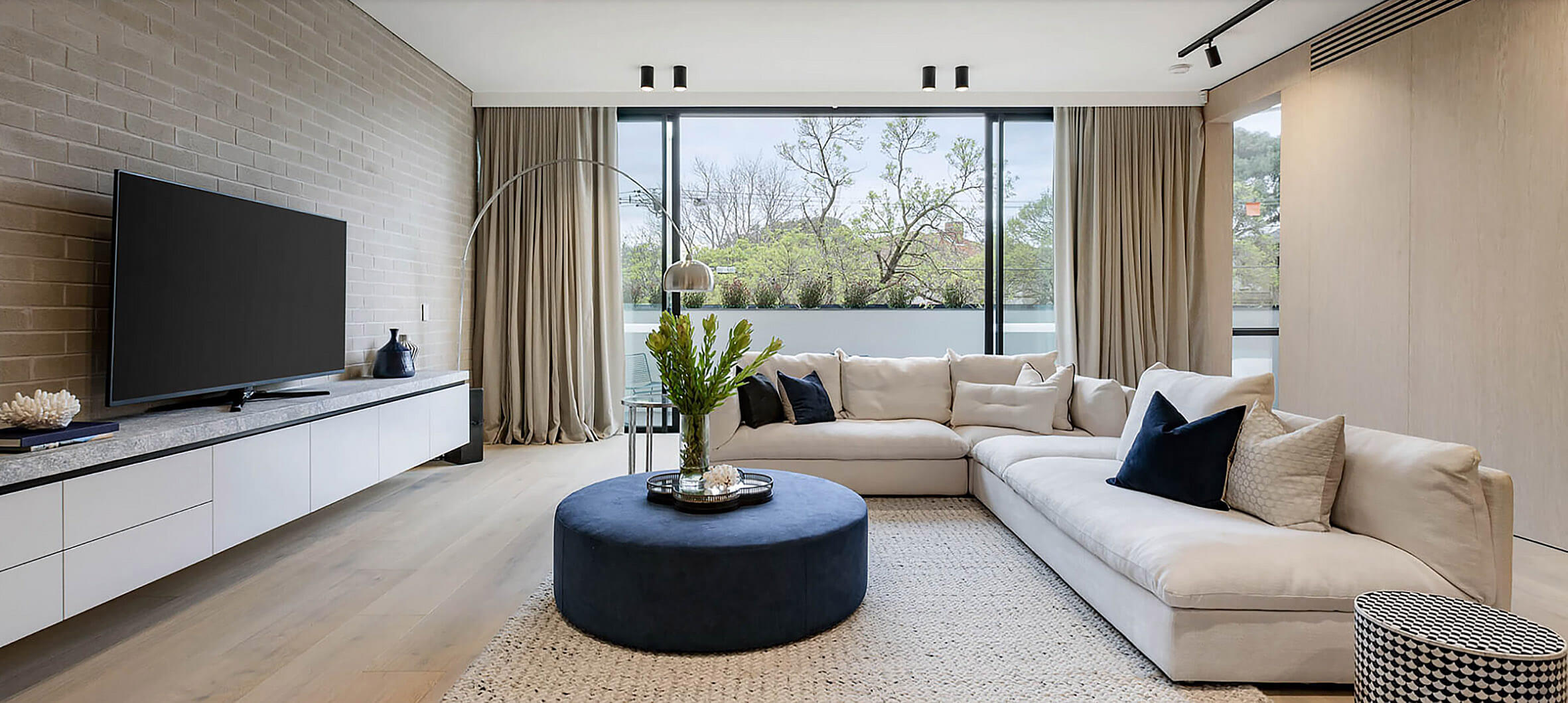
For residential properties, homeowners should consider their practical needs, the characteristics of each room, and the technical specifications of the materials.
Living rooms typically prioritize aesthetic appeal and flexible light control, while bedrooms may require greater light-blocking capability and privacy. For areas with specific safety requirements, material selection should be guided by appropriate technical advice.
Homeowners should not consider fire-resistant curtains a substitute for smoke alarms, fire detection systems, or other essential home fire safety measures.
5.2. Fire-Resistant Curtains for Hotels and Restaurants
Hotels and restaurants often experience high levels of occupancy and must maintain a professional appearance.
When selecting curtains, property owners should prioritize products with clear technical documentation, coordinated colors, suitable durability, and manufacturer-recommended cleaning procedures.
It is particularly important to review the interior material requirements specified in the project documentation and the applicable regulations for the building. Product selection should never be based solely on appearance or price.
5.3. Fire-Resistant Curtains for Offices and Commercial Buildings
Offices commonly use curtains on glass windows, in meeting rooms, and throughout workspaces to reduce glare and provide privacy.
Suitable roller blinds or fabric curtains with flame-retardant properties can meet the aesthetic and functional needs of these environments.
However, if the curtains are intended for areas with specialized technical requirements, coordinate with the project management team or a qualified consultant to determine which products are appropriate for the intended application.
5.4. Fire-Resistant Curtains for Schools and Healthcare Facilities
Schools and healthcare facilities must pay particular attention to occupant safety, ease of cleaning, and material durability.
In addition to fire performance, consider fabric texture, cleaning methods, colorfastness, and suitability for the intended environment.
Product selection should be based on the specific requirements of each area and the project's technical documentation rather than applying the same type of curtain to every location.
6. Common Mistakes to Avoid When Buying Fire-Resistant Curtains
One common mistake is assuming that all curtains marketed as fire-resistant provide the same level of protection. In reality, products can differ significantly in their materials, treatment methods, and test results.
A second mistake is focusing exclusively on price while overlooking technical documentation. Lower-priced products without appropriate verification documents may fail to meet the project's requirements.
A third mistake is confusing flame-retardant fabrics with curtain systems designed to resist fire for a specified period. These two product categories serve different purposes and are subject to different technical requirements.
Customers should also avoid using cleaning chemicals or washing methods that have not been approved by the manufacturer, as these may affect the fire-resistant properties of certain treated fabrics.
To minimize risks, request written product specifications, review the relevant test reports, and choose a supplier that can clearly explain the intended applications and limitations of each curtain product.

7. How Much Do Fire-Resistant Curtains Cost?
The price of fire-resistant curtains depends on several factors, including fabric type, manufacturing technology, material origin, dimensions, hardware, and installation requirements.
Products with specific testing documentation, specialized materials, or more demanding technical requirements may cost more than conventional decorative curtains.
For projects involving multiple windows, it is advisable to prepare a list of window dimensions and identify the technical requirements before requesting a quotation. This helps suppliers recommend suitable products and minimizes unexpected costs during installation.
When comparing quotations, check whether the price includes fabric, hardware, measuring services, transportation, installation, and any relevant technical documentation.
Most importantly, compare products that meet the same technical requirements rather than evaluating them solely by price per square meter.
At ZenDecor, customers can explore window treatment solutions tailored to their interior design preferences and practical needs. For projects requiring fire-resistant properties, discuss the technical specifications in advance to ensure appropriate product recommendations and identify the necessary documentation for verification.
Choosing fire-resistant curtains involves more than selecting colors or styles; it also requires careful consideration of material properties, technical documentation, and the intended application.
For residential properties, prioritize solutions that suit everyday living needs and relevant safety considerations. For hotels, offices, schools, and commercial buildings, identify the applicable standards, review test documentation, and select products that meet the project's specifications.
A suitable curtain solution should balance material quality, aesthetic appeal, reliable operation, and relevant technical requirements.
If you are looking for curtains for your home or commercial project, start by identifying your needs, assessing the installation area, and consulting a qualified supplier. This approach can help you select suitable products, optimize costs, and create a safer, more comfortable, and modern environment.
Choose Fire-Resistant Curtains Wisely for a Balance of Safety and Style!
>> Explore More: Premium Rainbow Blinds – Modern Elegance to Elevate Your Living Space | ZenDecor
Related articles
View all
Premium Curtains for Modern Homes – Elegance, Luxury, and a Connection to Nature | ZenDecor
In modern architecture, curtains do more than block sunlight or provide privacy; they also play an important role in enhancing interior design. A well-chosen set of curtains can soften expansive glass surfaces, regulate natural light, and create a harmonious atmosphere throughout the living space.

Premium Rainbow Blinds – Modern Elegance to Elevate Your Living Space | ZenDecor
Premium rainbow blinds are a modern window treatment that combines alternating sheer and opaque fabric bands, allowing flexible light control and enhanced privacy. Featuring an elegant design, a variety of colors, and a sleek, space-saving style, these blinds are ideal for living rooms, bedrooms, apartments, and offices, creating a comfortable, stylish, and sophisticated living environment.
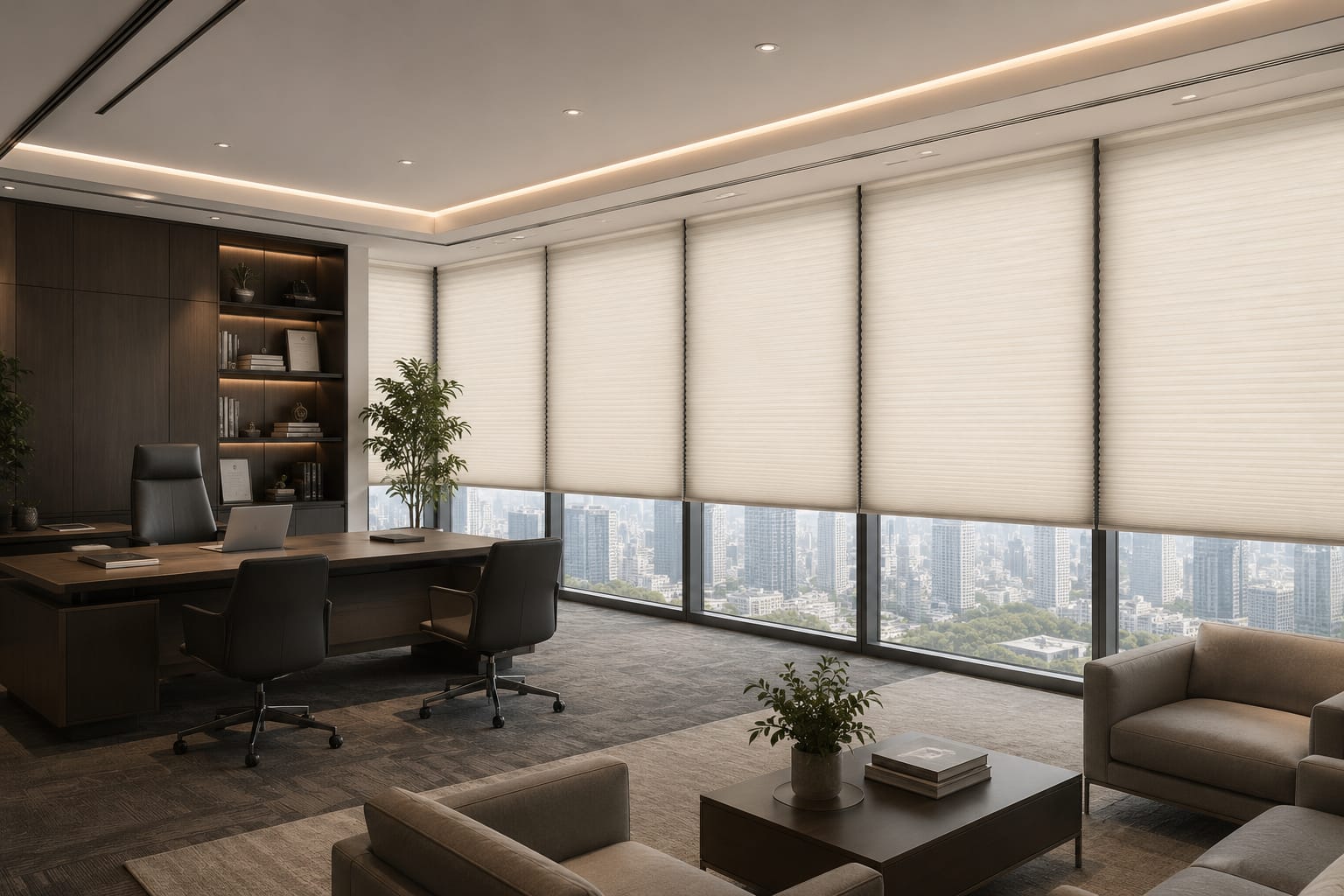
Which Blinds Are Best for Offices? Top 7 Stylish, Modern, and Practical Options
Office spaces are not only places to work but also reflect a company's professional image, style, and culture. Alongside furniture, lighting, and interior colors, office blinds and curtains play an important role in controlling natural light, reducing heat from sunlight, ensuring privacy, and enhancing the overall aesthetics of the workspace.
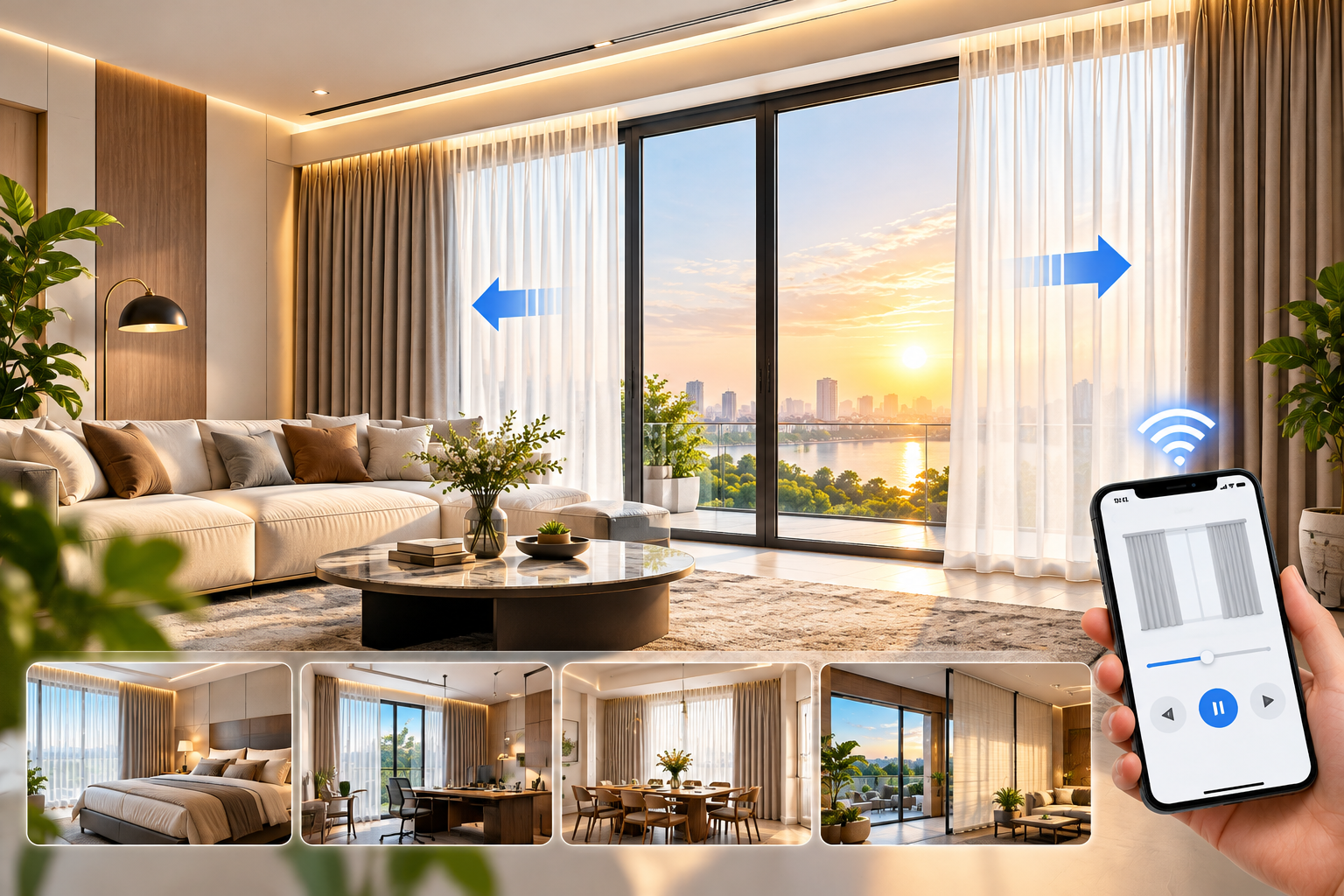
ZenDecor Automatic Curtains – Combining Aesthetics, Convenience, and Technology
In modern architecture, living spaces are increasingly designed with a focus on aesthetics, convenience, and the integration of smart technology. Beyond traditional interior furnishings, curtains have also evolved to offer a more flexible and convenient user experience. ZenDecor Automatic Curtains are an ideal solution for homeowners, luxury apartments, villas, hotels, and offices seeking to elevate their living and working environments.