
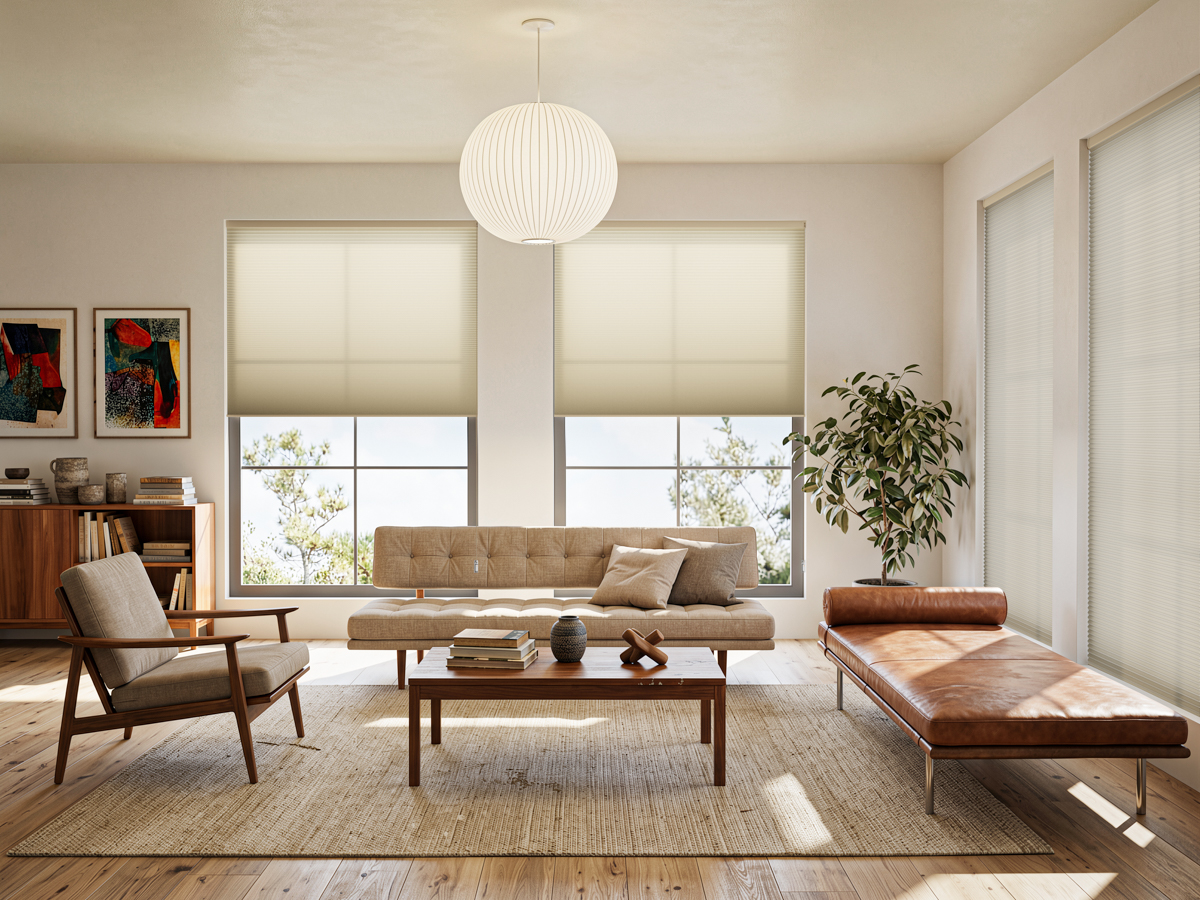
Honeycomb Blinds – An Elegant Solution to Elevate Townhouse and Villa Interiors
In modern architectural design, shading and space partitioning solutions are receiving increasing attention as they address the growing demand for functionality, aesthetics, and everyday comfort. Particularly in townhouses and villas, selecting the right blind system not only helps regulate natural light and enhance privacy but also contributes to a harmonious and cohesive interior design.
Alongside traditional fabric curtains, roller blinds, and zebra blinds, honeycomb blinds have become an increasingly popular window covering solution thanks to their compact design, innovative construction, and versatile applications in modern residential projects.
Featuring a distinctive pleated cellular fabric structure combined with aluminum framing and suitable operating mechanisms, honeycomb blinds can be used for window shading, thermal insulation, privacy enhancement, and flexible space partitioning without the need for permanent walls.
At ZENDECOR, honeycomb blinds are an excellent option for townhouses, villas, and contemporary living spaces where every finishing detail contributes to both functionality and aesthetic appeal.
1. What Are Honeycomb Blinds? Structure and Operating Principles
Honeycomb blinds (also known as Cellular Shades or Cellular Blinds) are a type of window covering made from specially constructed pleated fabric. The fabric layers are bonded together to form hollow cells resembling the hexagonal structure of a honeycomb.
This unique cellular construction distinguishes honeycomb blinds from conventional roller blinds, Venetian blinds, and fabric curtains.
Main Components of a Honeycomb Blind System
A typical honeycomb blind system consists of the following components:
-
Honeycomb Cellular Fabric: Specially pleated material featuring interconnected air pockets that help reduce heat transfer through windows.
-
Aluminum Profiles: Structural components that provide support and help secure the blind system.
-
Operating Handle or Bottom Rail: Allows users to open and close the blinds while maintaining stability during operation.
-
Guide Rail System: Used in certain framed or horizontally operated honeycomb blind systems to ensure smooth and controlled movement.
-
Operating Mechanism and Accessories: Includes transmission components, guide cords, and pulling mechanisms, depending on the specific blind system.
-
Surrounding Frame: An optional framing system designed for installation on glass doors, windows, or interior partitions.
Depending on the product design, honeycomb blinds can operate vertically, horizontally, or through a top-down/bottom-up configuration.
How Honeycomb Blinds Work
When opened, the pleated fabric compresses neatly toward one side or into a designated stacking position, depending on the operating system.
When closed, the pleated fabric expands to form a relatively flat covering surface while maintaining the internal cellular air pockets.
This innovative construction allows honeycomb blinds to combine space-saving functionality with effective light management and improved thermal performance around windows.
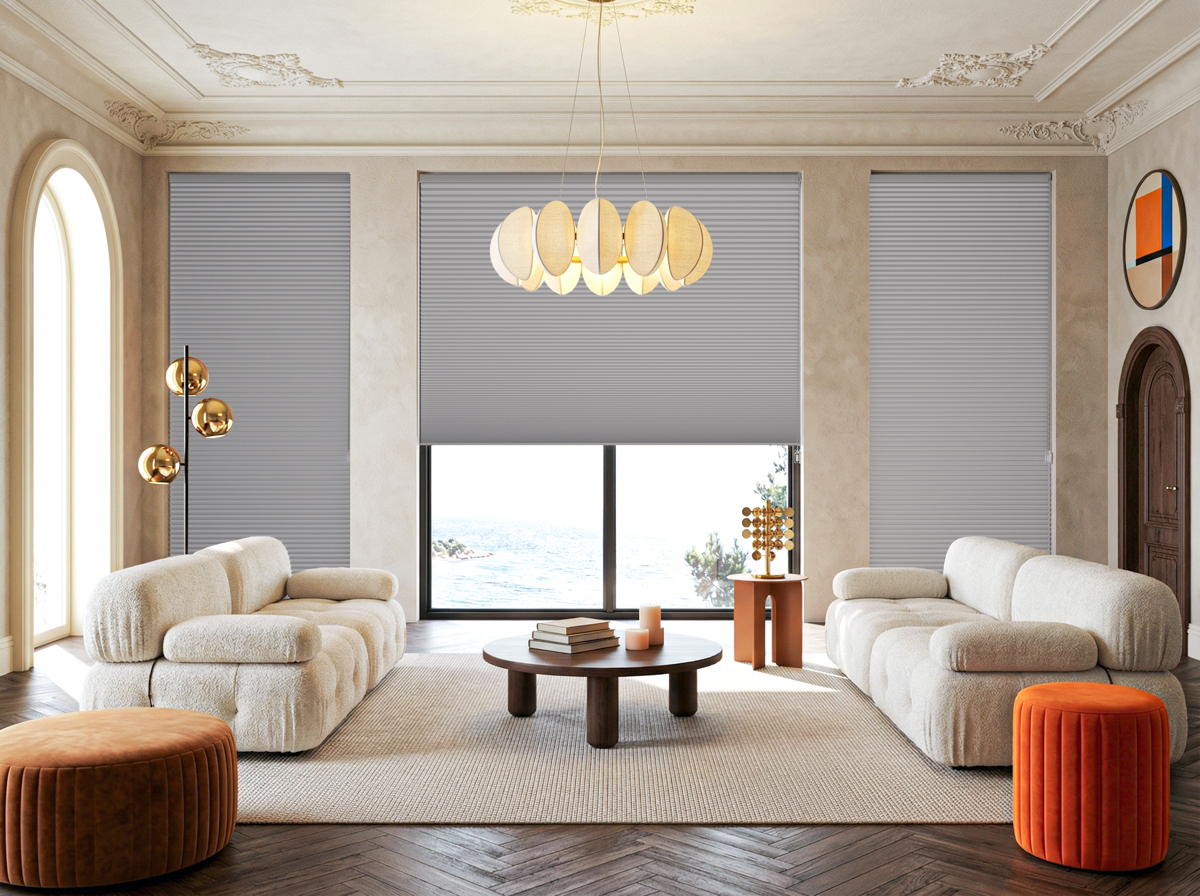
2. Why Are Honeycomb Blinds Suitable for Townhouses and Villas?
2.1. Compact Design for Efficient Space Utilization
One of the most notable advantages of honeycomb blinds is their ability to fold away compactly.
Unlike traditional fabric curtains, which often require additional space for fabric stacking, honeycomb blinds feature a continuous pleated structure that can be compressed neatly into a relatively small area.
This makes them particularly suitable for small windows, glass doors positioned close to walls, interior doorways, and areas with limited available space.
In townhouses, where interior layouts often require careful space planning, honeycomb blinds help minimize obstructions and improve everyday convenience.
For villas, their streamlined appearance complements contemporary architecture and contributes to a cohesive interior design.
2.2. Enhanced Thermal Insulation Through Cellular Air Pockets
The cellular air-pocket structure is one of the most distinctive technical features of honeycomb blinds.
The hollow chambers formed between the fabric layers trap relatively still air, creating an insulating barrier that helps slow heat transfer through the window area.
When properly installed on glass windows, honeycomb blinds can help reduce heat gain from outside during hot weather.
Similarly, in colder conditions, the cellular structure can help minimize heat loss through windows, contributing to a more comfortable indoor environment.
However, actual thermal insulation performance depends on the fabric construction, number of cellular layers, installation tightness, glazing area, and overall installation conditions.
Honeycomb blinds should therefore be considered a supplementary thermal comfort solution rather than a complete replacement for specialized building insulation systems.
2.3. Flexible Light Control and Enhanced Privacy
Honeycomb blinds are available in various fabric options, ranging from light-filtering materials to high light-blocking fabrics.
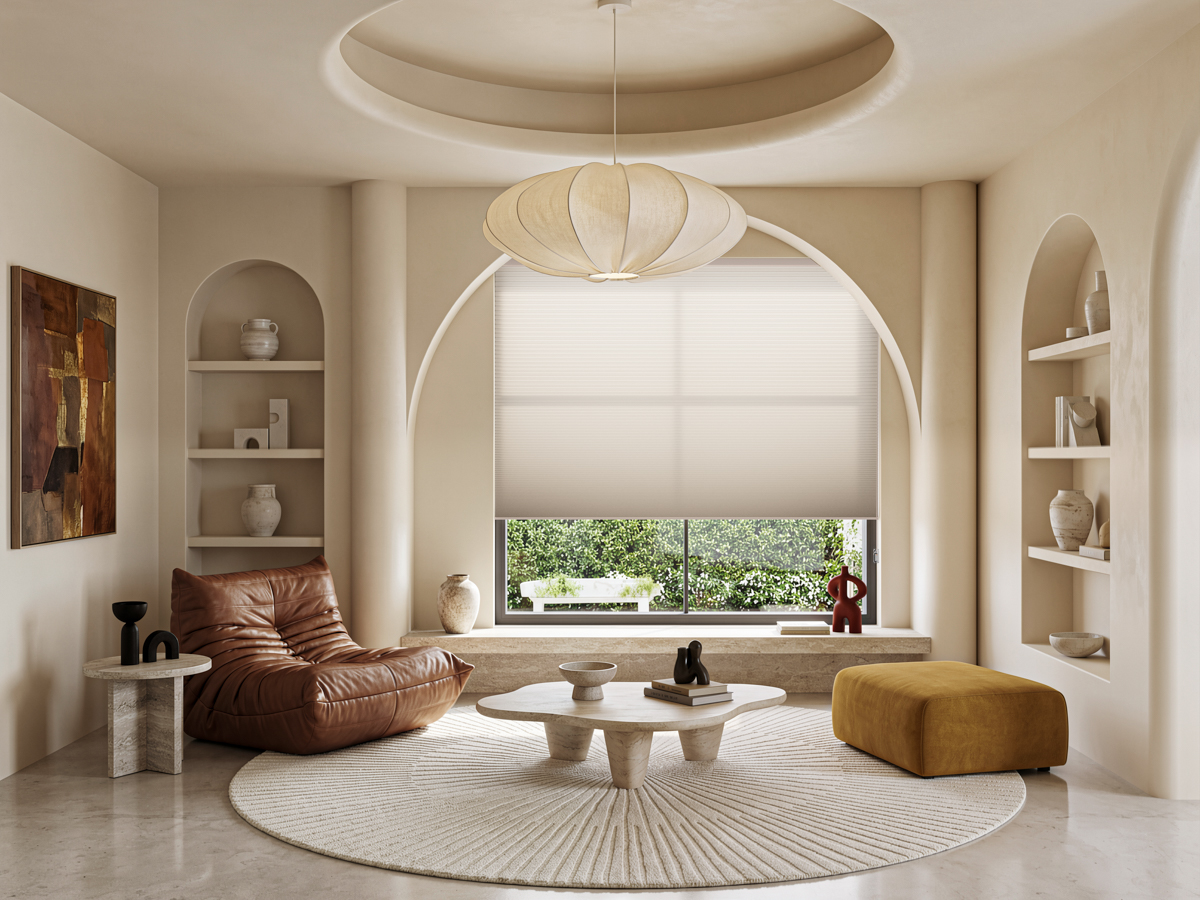
For living rooms and shared spaces, light-filtering honeycomb blinds allow soft, diffused daylight to enter, creating a comfortable and welcoming atmosphere.
In bedrooms or home offices where stronger light control is required, high light-blocking cellular fabrics are a suitable option.
When fully extended, the fabric helps restrict visibility from outside, providing greater privacy for everyday activities.
For residential projects featuring large glass windows, honeycomb blinds offer a practical balance between natural daylight and effective window coverage.
2.4. Minimalist Lines and Refined Interior Aesthetics
Honeycomb blinds are characterized by evenly spaced pleats that create a subtle, rhythmic surface texture.
When combined with color-coordinated aluminum framing, the blinds deliver a clean, contemporary appearance without excessive decorative details.
Neutral shades such as ivory, beige, light gray, charcoal gray, and soft brown are commonly selected for modern interior projects.
Their minimalist design allows honeycomb blinds to coordinate effortlessly with glass, wood, stone, painted walls, and metal finishes.
3. Applications of Honeycomb Blinds in Townhouse Interiors
3.1. Honeycomb Blinds for Living Room Windows
Living rooms in townhouses often require maximum natural daylight, particularly in properties with narrow frontages or windows positioned close to seating areas.
Honeycomb blinds provide flexible light control while maintaining a clean and uncluttered window appearance.
In interiors featuring light-colored furniture, ivory or light gray honeycomb blinds can create a bright, airy, and elegant atmosphere.
For living rooms exposed to direct sunlight, selecting fabrics with appropriate light-blocking and thermal performance is recommended.
3.2. Honeycomb Blinds for Bedroom Windows
Bedrooms require a balance of privacy, comfort, and effective light control.
High light-blocking honeycomb blinds help reduce incoming daylight while providing a neat and streamlined window covering.
For smaller bedroom windows, inside-recess installation can help save space and create a seamless architectural appearance.
Where a high level of darkness is required, additional consideration should be given to side guide rails, edge light gaps, and the fabric's specified light-blocking performance.
3.3. Honeycomb Blinds for Interior Doorways and Room Partitions
Another practical application is the use of horizontally operated honeycomb blinds as flexible room dividers.
These systems can be installed between living rooms and kitchens, home offices and shared living areas, or other spaces requiring temporary separation.
When the partition is no longer needed, the honeycomb fabric can be folded away compactly, restoring the visual connection between adjacent areas.
However, honeycomb room dividers cannot fully replace permanent partition walls in terms of airtightness, sound insulation, or structural strength.
3.4. Honeycomb Blinds for Staircases and Hallways
In open-plan townhouses, staircases and hallways may occasionally require separation to enhance privacy or help limit airflow between different floors.
Horizontally operated honeycomb partition systems can provide a flexible solution where the existing building structure allows suitable installation.
The selection of guide rails, surrounding frames, and fixing methods should be carefully evaluated to ensure stable and reliable operation.
Professional installation is essential to achieve proper alignment, smooth movement, and long-term functionality.
4. Honeycomb Blinds in Villa Interior Design – A Perfect Balance of Functionality and Aesthetics
In villa projects, the selection of finishing materials is closely associated with architectural consistency, interior harmony, and the overall quality of the living experience.
Honeycomb blinds offer versatile solutions for various applications, from shading large glass windows to creating flexible partitions between functional areas.
4.1. Honeycomb Blinds for Large Glass Windows
Many modern villas feature expansive glass windows and doors to strengthen the connection between indoor living spaces and outdoor landscapes.
However, large glazed areas can also increase solar glare and heat gain inside the building.
Selecting honeycomb blinds with an appropriate cellular structure can help manage these conditions, improving indoor comfort and light control.
For oversized windows, it is essential to verify the manufacturer's maximum production dimensions, guide rail stability, and the operating capabilities of each blind system.
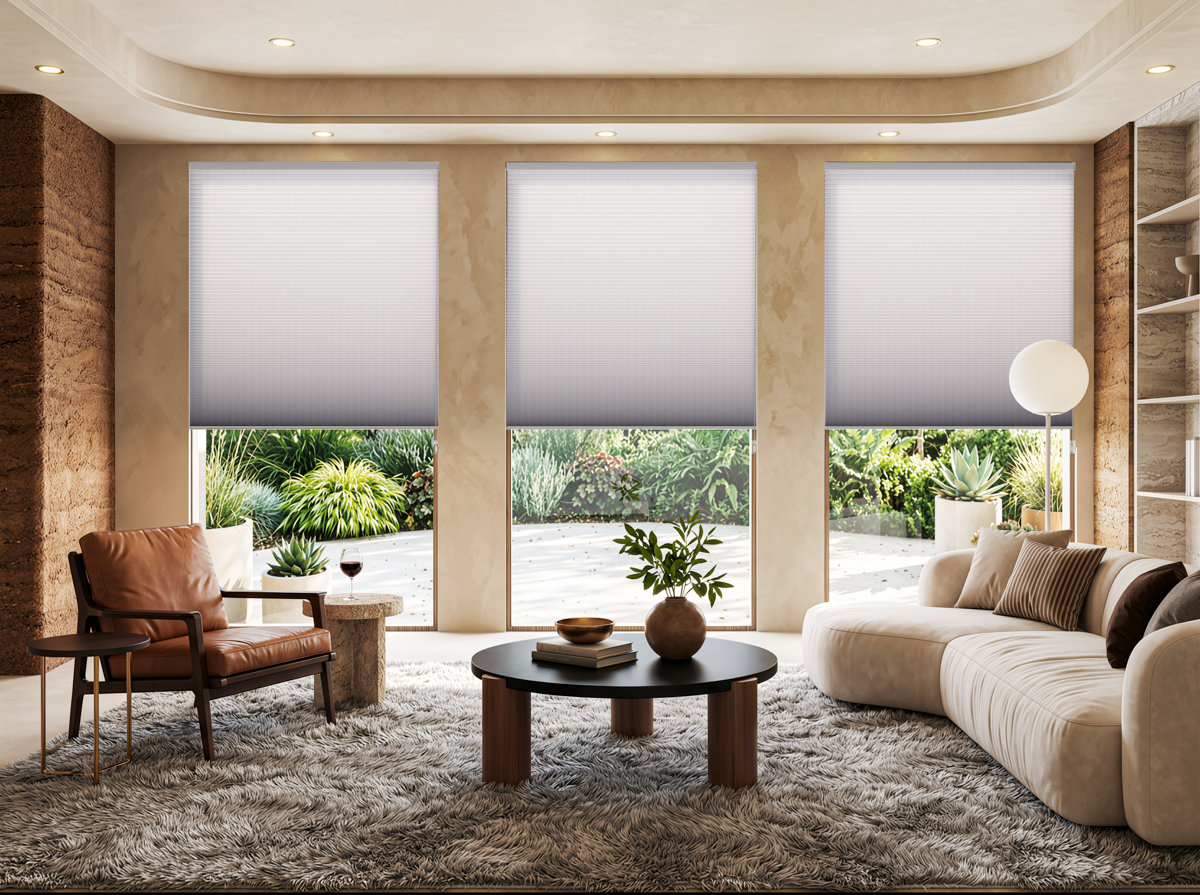
4.2. Honeycomb Blinds for Family Living Rooms
Family living areas in villas are typically designed to prioritize comfort, flexibility, and a welcoming atmosphere.
Honeycomb blinds can be installed to regulate natural light at windows or to create temporary divisions between different functional zones when necessary.
Thanks to their compact, streamlined design, these blinds maintain a light and uncluttered appearance while preserving the elegance and sophistication of the overall interior.
4.3. Honeycomb Blinds for Home Offices and Reading Rooms
In spaces where concentration and privacy are essential, honeycomb blinds help reduce direct sunlight and limit visibility from outside.
Neutral-colored cellular fabrics, evenly spaced pleats, and coordinated operating accessories are particularly suitable for home offices, private studies, and reading rooms in modern villas.
5. Types of Honeycomb Blinds Based on Function and Operating Systems
To select the most suitable product, it is important to distinguish between honeycomb blind systems according to their fabric characteristics, functional requirements, and operating mechanisms.
|
Type of Honeycomb Blinds |
Key Features |
Recommended Applications |
|---|---|---|
|
Light-Filtering Honeycomb Blinds |
Diffuse natural daylight to create soft, comfortable interior lighting |
Living rooms, home offices |
|
Light-Blocking Honeycomb Blinds |
Significantly reduce the amount of light passing through the fabric |
Bedrooms, relaxation areas |
|
Horizontal Sliding Honeycomb Blinds |
Feature a horizontally retractable pleated structure |
Doorways, connecting spaces, room partitions |
|
Vertically Operating Honeycomb Blinds |
Open and close through vertical movement |
Windows, glazed openings |
|
Top-Down Bottom-Up Honeycomb Blinds |
Allow flexible positioning of the covered area from both the top and bottom in compatible systems |
Windows requiring adjustable privacy and daylight control |
|
Framed Honeycomb Blinds |
Incorporate guide rails or framing systems to control fabric movement |
Selected glass door systems and specialized window applications |
Not all honeycomb blind products support every operating configuration listed above. The appropriate system should be selected based on the manufacturer's technical specifications and the actual installation conditions.
6. Honeycomb Blinds vs. Traditional Curtains – Which Is the Better Choice?
Both honeycomb blinds and traditional fabric curtains offer distinct advantages, making them suitable for different interior design requirements and functional applications.
Traditional fabric curtains provide a soft, flowing appearance and a sense of luxury, making them particularly suitable for spaces where decorative elegance is a priority.
In contrast, honeycomb blinds feature a compact structure, flexible stacking capability, and an innovative cellular design that helps reduce heat transfer through windows.
For smaller windows or areas with limited installation space, honeycomb blinds can offer significant space-saving advantages.
In villa living rooms featuring expansive glass windows and requiring a softer decorative effect, double-layer fabric curtains may be a more appropriate choice.
In certain applications, both solutions can also be combined to achieve an effective balance between shading performance and interior decoration.
The key consideration is not choosing the most expensive window covering, but selecting the solution that best complements the architectural design, functional requirements, and practical needs of the space.
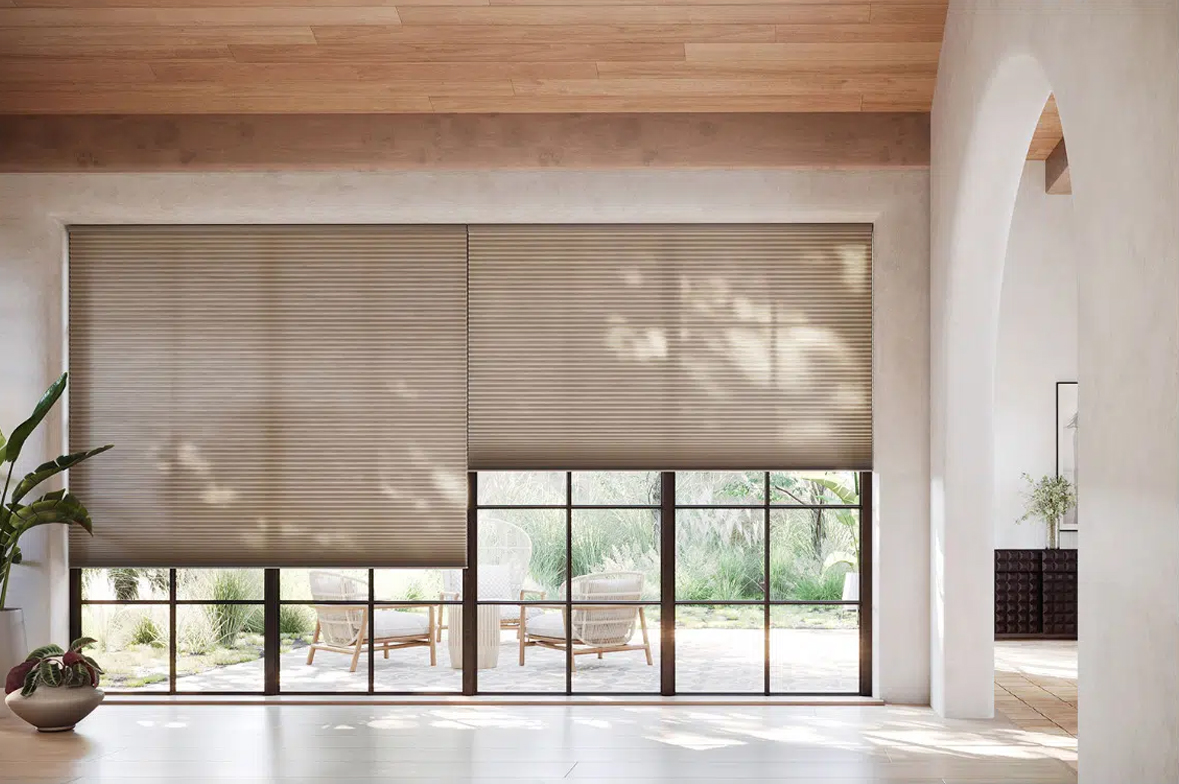
7. Important Considerations When Choosing Honeycomb Blinds for Townhouses and Villas
7.1. Select the Appropriate Blind System for Each Installation Area
Different areas within a building have specific functional and installation requirements.
For window applications, honeycomb blinds should prioritize effective daylight control and convenient operation.
For room partition applications, greater attention should be given to the supporting frame structure, guide rail system, and operational stability during opening and closing.
Selecting the correct blind system from the beginning helps minimize potential installation issues and ensures greater convenience during everyday use.
7.2. Evaluate Material Quality
Honeycomb cellular fabric should feature a stable pleated structure, consistent surface finishing, and the ability to maintain its shape throughout repeated operation.
For products incorporating light-blocking coatings or heat-reflective layers, it is advisable to review the manufacturer's technical specifications and maintenance instructions.
In addition, aluminum profiles and operating accessories should have suitable finishing quality to ensure structural consistency and a coordinated appearance.
7.3. Choose Colors That Complement the Interior
The color of honeycomb blinds should be carefully selected to harmonize with the overall interior color palette.
Light shades are ideal for creating a bright, airy atmosphere, while darker neutral tones can introduce subtle visual contrast and enhance the character of selected spaces.
Before making a final decision, it is recommended to examine physical fabric samples under the actual lighting conditions of the installation area.
7.4. Ensure Accurate Measurements Before Installation
For honeycomb blinds, accurate dimensions directly affect installation quality, operational performance, and the overall appearance of the finished system.
Installation technicians should carefully assess the width, height, squareness of the window opening, and the structural conditions required for secure frame mounting.
For horizontally sliding honeycomb blinds or room partition systems, particular attention should be given to guide rail positioning, fabric stacking space, and potential obstructions along the operating path.
8. Honeycomb Blind Consultation and Installation Process at ZENDECOR
A beautifully finished honeycomb blind system depends not only on material quality but also on accurate measurements, appropriate system selection, and professional installation that suits the building's structural conditions.
Step 1: Site Survey and Assessment
Inspect the installation location, actual dimensions, wall or ceiling materials, and any structural factors that may affect the installation process.
Step 2: Consultation and System Recommendation
Recommend the most suitable honeycomb blind system based on specific requirements, including sun shading, light blocking, room partitioning, privacy, and thermal insulation support.
Step 3: Material and Color Selection
Provide guidance on fabric colors, cellular construction, light-blocking performance, and aluminum frame finishes to ensure visual harmony with the surrounding interior.
Step 4: Measurement and Final Dimension Confirmation
Determine the finished blind dimensions according to the selected system configuration, technical requirements, and actual site conditions.
Step 5: Installation and Adjustment
Secure the frame, guide rails, or mounting brackets in accordance with the system's technical installation requirements.
Check the alignment, levelness, stability, and smooth operation of the entire blind system.
Step 6: Final Inspection and Handover
Test the blind system to ensure smooth opening and closing, inspect contact points and operating components, and provide customers with appropriate instructions for operation, cleaning, and maintenance.
9. Cleaning and Maintenance Guidelines for Honeycomb Blinds
Due to their distinctive cellular air-pocket structure and pleated fabric design, honeycomb blinds require proper cleaning and maintenance in accordance with the manufacturer's recommendations.
During regular use, accumulated dust should be gently removed from the fabric surface using a soft brush or a vacuum cleaner equipped with a suitable brush attachment and low suction power.
Avoid excessive rubbing or applying chemical cleaning agents without first checking the material's water resistance and specific fabric characteristics.
For horizontally sliding honeycomb blind systems, the guide rails should be kept clean and free from dust, debris, or other obstructions that could interfere with smooth opening and closing.
When operating the blinds, gently move the handle or operating rail in the intended direction, avoiding excessive force that could damage the mechanism or affect fabric alignment.
If problems such as jammed guide rails, misaligned frames, or uneven fabric pleats occur, it is advisable to contact a professional installation or technical service provider for inspection and adjustment.
Proper cleaning and maintenance help preserve the aesthetic appearance, structural stability, and smooth operation of honeycomb blinds throughout their service life.
10. ZENDECOR – Elegant Honeycomb Blind Solutions for Modern Living Spaces
In townhouse and villa interior design, comfort and sophistication are not defined solely by major furnishings or architectural features. They are also reflected in the thoughtful selection and finishing of every interior detail.
A well-designed blind system can create a cleaner, more organized appearance, enhance privacy, and provide greater control over natural daylight.
With its range of honeycomb blinds, ZENDECOR focuses on introducing versatile window shading and space partitioning solutions that complement contemporary architectural trends.
From living room and bedroom windows to glass doors and areas requiring flexible separation, each installation location should be carefully evaluated to determine the most suitable cellular fabric construction, operating mechanism, and accessory system.
For townhouses and villas in particular, selecting honeycomb blinds requires careful coordination between fabric colors, aluminum frame finishes, and the overall interior design style.
A high-quality blind system should offer more than an attractive modern appearance. It must also meet practical requirements, provide convenient operation, and suit the specific conditions of the installation site.
ZENDECOR – Enhancing Living Spaces with Refined Curtain and Blind Solutions.
11. Conclusion – Honeycomb Blinds: A Space-Saving Solution for Modern Townhouses and Villas
Honeycomb blinds are an innovative and practical window covering solution worth considering for contemporary townhouses and villas.
Featuring a distinctive cellular air-pocket structure, compact pleated design, and a wide selection of fabric options, honeycomb blinds can meet various functional requirements, including daylight control, improved thermal comfort, enhanced privacy, and flexible space partitioning.
However, achieving the desired performance and aesthetic results requires careful consideration of the architectural design, window dimensions, material quality, and appropriate installation methods.
A properly selected honeycomb blind system not only helps optimize available space but also contributes to a harmonious, comfortable, and sophisticated living environment.
If you are looking for honeycomb blind solutions for townhouses, villas, or contemporary interiors, explore the product collections and professional consultation options available at ZENDECOR to find the most suitable blind system for your project.
Related articles
View all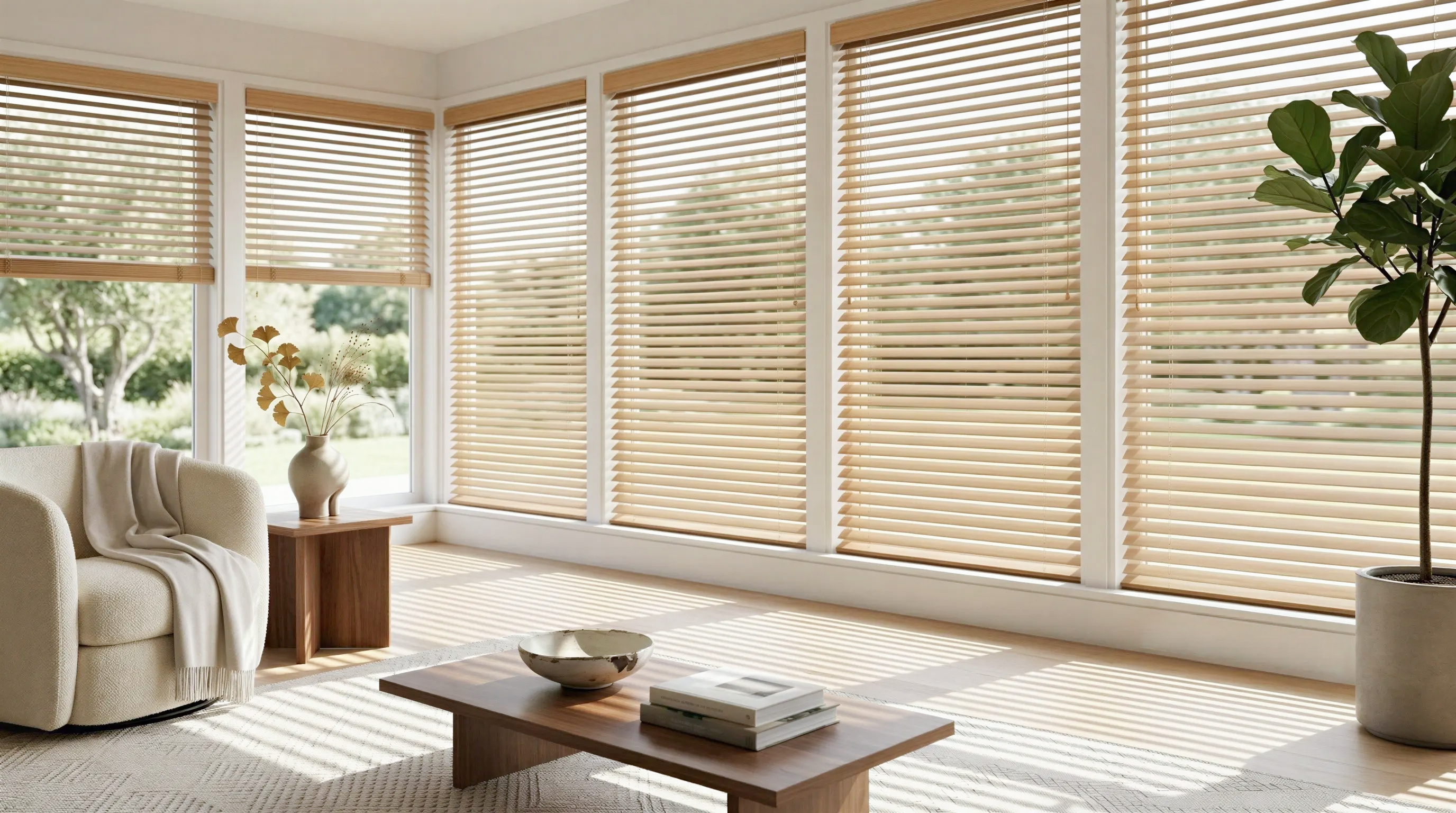
Wooden Venetian Blinds – The Essence of Natural Materials, a Touch of Aesthetic Elegance in Every Window
In interior design, the beauty of a space is not solely defined by expensive furniture or elaborate decorative details. Sometimes, it is the harmonious balance of light, materials, and colors that creates a sense of elegance, warmth, and depth.
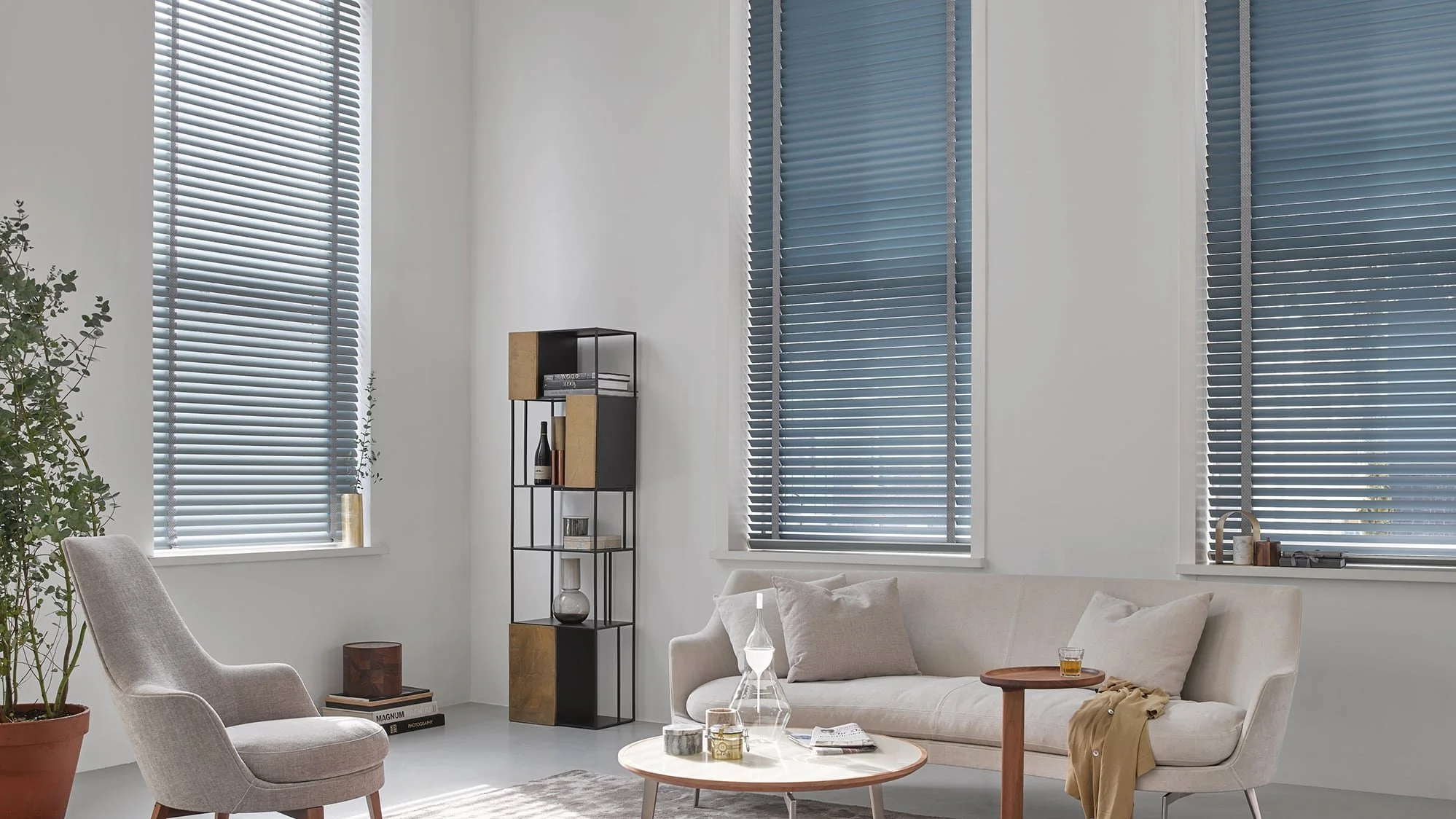
The Minimalist Beauty of Aluminum Venetian Blinds in Modern Architecture
In modern interior design trends, luxury is no longer defined solely by elaborate decorative details or expensive materials. Instead, it increasingly embraces minimalist beauty, harmonious aesthetics, and functional design. Every line, color, and material is thoughtfully selected to create a clean, elegant, and well-organized living space while maintaining its own distinctive character.
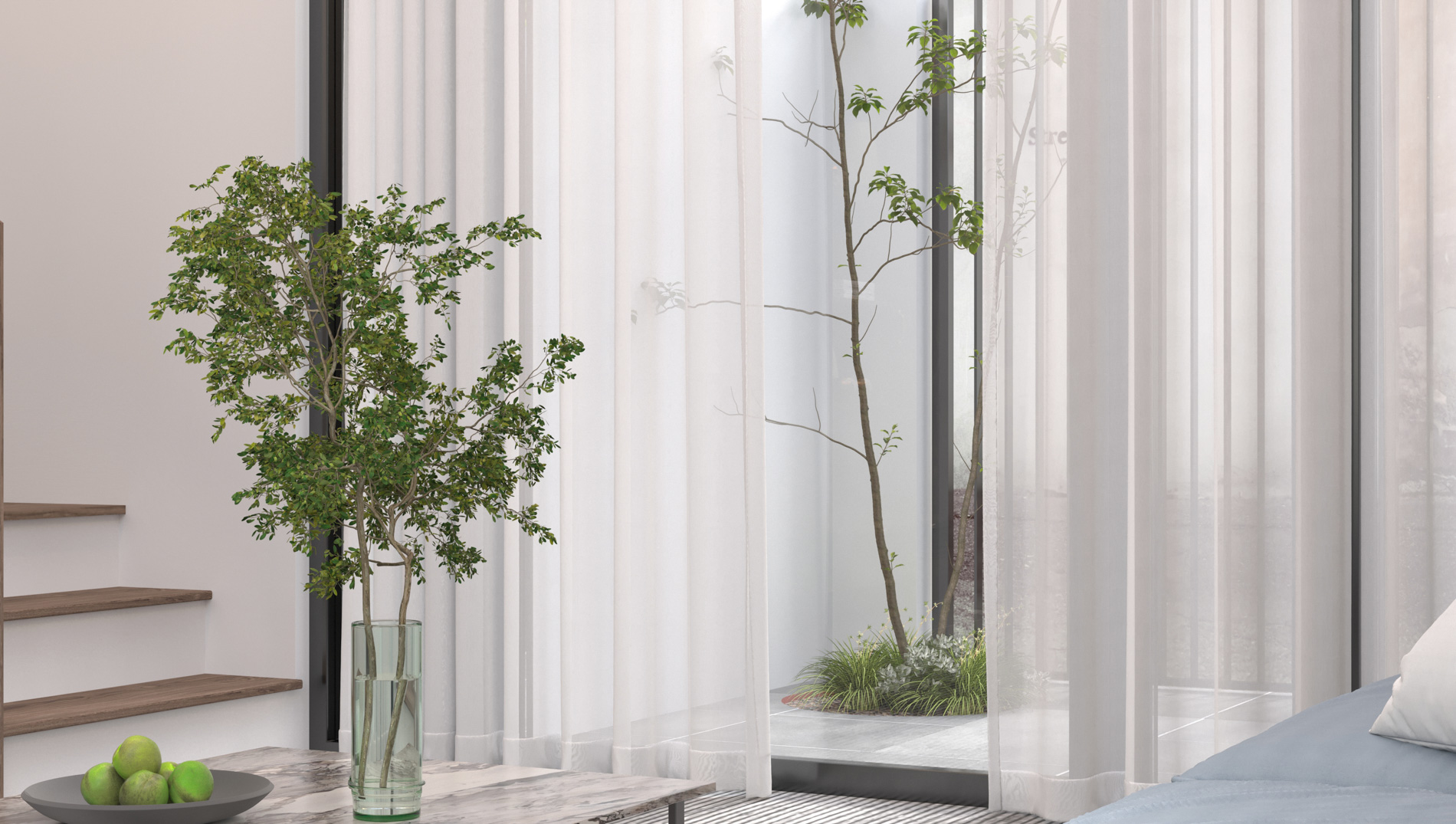
Decorative Sheer Curtains – The Secret to Creating Light, Elegant, and Luxurious Living Spaces
In modern interior design, the beauty of a space is defined not only by expensive furniture or elaborate decorative details but also by the harmonious combination of lighting, colors, and materials. Sometimes, a simple layer of soft, flowing sheer curtains framing a window is enough to transform the entire atmosphere of a room, creating a sense of lightness, elegance, sophistication, and timeless charm.
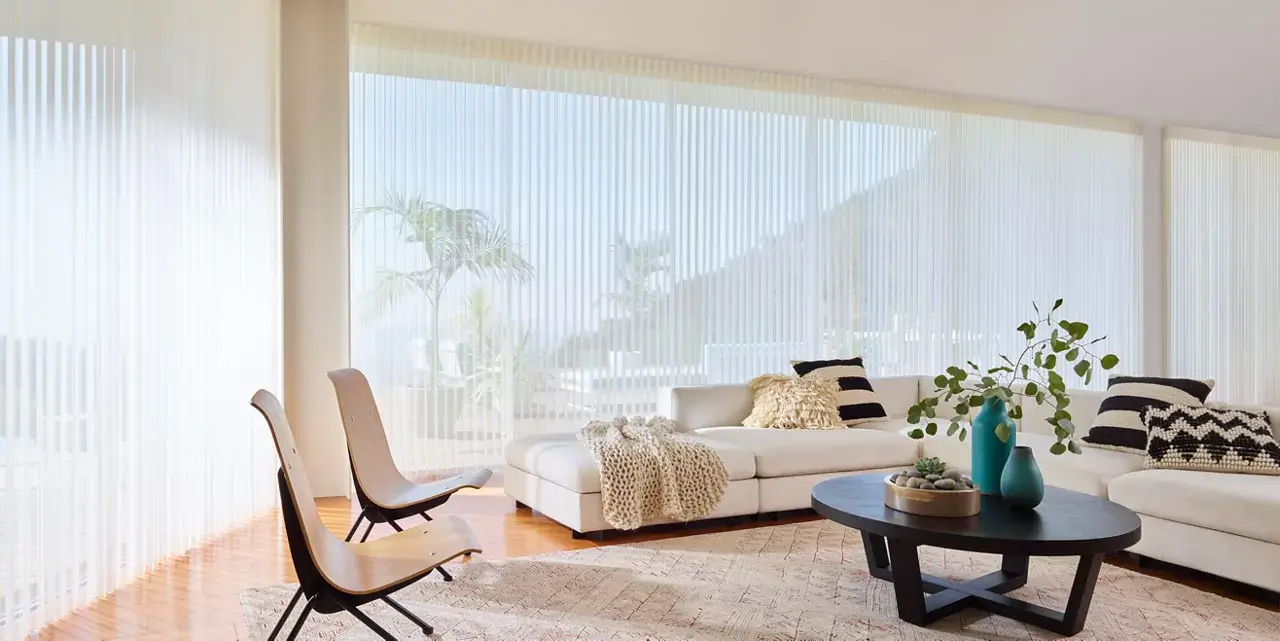
Premium Vertical Blinds – A Modern Window Decoration Solution
In modern interior design, every detail contributes to creating a unique identity for a living space. From colors, materials, and lighting to the selection of window curtains and blinds, all elements should be harmoniously coordinated to create an aesthetically pleasing, functional, and inviting architectural environment.